
Table of Contents
- What Affects Professional Irrigation System Installation Cost in Australia
- Average Cost of Sprinkler System Installation Australia
- Drip Irrigation System Installation Cost Australia
- Professional Installation Labour Rates and Components
- Benefits of Professional Irrigation Installation Australia
- Maintenance and Long-Term Running Costs
- Why Choose Professional Installation Over DIY
- Conclusion
Last Updated: August 2, 2026
Understanding professional irrigation system installation cost in Australia requires more than a simple price quote. At WaterPro’s, we’ve spent over three decades helping Melbourne homeowners navigate irrigation investment. Costs vary dramatically based on property size, soil conditions, water pressure, and local regulations. This guide breaks down every factor influencing what you’ll actually pay.
The true cost extends beyond sprinkler heads and pipes to include site assessment, system design, excavation, trenching, component selection, labour, and regulatory permits. Most homeowners discover hidden costs only after receiving their first quote, which is why understanding the full picture upfront matters.
What Affects Professional Irrigation System Installation Cost in Australia
Several interconnected variables determine your final installation bill, each directly impacting materials, labour hours, and equipment required.
Property size and system complexity
Larger properties demand more pipe, more zones, and more sophisticated controllers. A 500-square-metre residential block requires a fundamentally different approach than a 2,000-square-metre property. The relationship between property size and cost isn’t linear; doubling your garden size doesn’t double installation expense, but material costs and labour hours accumulate quickly.
System complexity extends beyond square metreage. Properties with multiple garden levels, mixed planting zones requiring different water schedules, and varying sun exposure need sophisticated controllers and custom zone design. WaterPro’s detailed site assessment maps these variations before digging begins, ensuring your system delivers water precisely where needed rather than wasting resources.
Request a free garden irrigation design service from your installer. This step prevents costly redesigns after trenching begins and ensures your system matches your actual garden’s needs.
Soil type and site conditions
Soil composition directly affects water infiltration rates and drainage patterns. Sandy soils absorb water quickly but retain it poorly, requiring different drip line spacing than clay soils, which drain slowly. Rocky or compacted soil increases excavation difficulty substantially.
Site conditions like existing structures, tree roots, and underground utilities add complexity and expense. Trenching around established trees, navigating electrical conduits, or working in steep terrain increases labour hours. The initial site survey identifies these obstacles before installation begins, preventing expensive mid-project complications.
Water pressure and flow rate requirements
Your property’s water supply characteristics determine which components you’ll need. Low water pressure (below 20 PSI) requires a pressure-boosting pump, adding several hundred dollars. High water pressure (above 80 PSI) demands pressure-reducing valves to prevent pipe damage. Flow rate determines how many zones your system can run simultaneously and influences pipe diameter selection.
Professional installers test your water pressure and flow rate during initial assessment, using this data to specify components matching your actual conditions.
Regional permits and water restrictions
Australia’s water restrictions vary significantly by region, and many councils require irrigation permits before installation. Some areas impose strict limitations on watering days and times, influencing system design and controller programming. Permit fees and compliance testing add to your professional irrigation system installation cost.
Backflow prevention devices are mandatory in most Australian jurisdictions to protect mains water supply from contamination. These devices cost between several hundred to over a thousand dollars depending on system complexity and local water authority requirements. Non-compliance results in system disconnection.
Average Cost of Sprinkler System Installation Australia
Residential irrigation system installation costs depend heavily on the factors outlined above, but understanding typical ranges helps you benchmark quotes.
Cost per square metre for residential properties
Professional installers in Australia typically quote residential sprinkler system installation at varying rates per square metre, depending on system type, soil conditions, and local labour rates. Straightforward soil with existing water access costs less per square metre than complex installations with challenging site conditions.
The cost-per-square-metre approach breaks down when comparing vastly different property sizes or system types. Per-square-metre pricing serves as a rough guide only; your actual quote should be based on detailed site assessment and system design specific to your property.
Manual versus automated sprinkler systems
Manual irrigation systems, where you turn water on and off using outdoor taps, represent the lowest-cost installation option. These require minimal components and labour but demand consistent user intervention, making them impractical for most homeowners.
Automated sprinkler systems include an irrigation controller managing watering schedules automatically. Controllers range from basic mechanical timers to sophisticated smart controllers adjusting watering based on weather data and soil moisture readings. Installation labour increases because the system requires electrical connections and complex zone programming.
Automated systems reduce water waste through consistent scheduling, prevent forgotten watering, and require less daily attention. Many homeowners recover the upfront cost difference within a few seasons through reduced water bills and healthier landscapes.
Drip Irrigation System Installation Cost Australia
Drip irrigation systems deliver water directly to plant root zones through small-diameter tubing and emitters, fundamentally different from sprinkler systems in installation approach and performance.
Why drip systems cost differently than sprinklers
Drip irrigation requires careful site planning because each garden bed, tree, or shrub needs individual emitter placement. This customization increases design time and installation labour compared to pop-up sprinkler systems. Drip lines are more labour-intensive because they’re laid on or just below soil surface throughout your garden.
However, drip systems use significantly less water than sprinklers, often 30-50% less, because water reaches plant roots with minimal evaporation loss. Over multi-year periods, water savings often exceed higher installation costs, particularly in regions with strict water restrictions or high water rates. Drip systems also reduce weed growth and fungal diseases because foliage stays dry.
WaterPro’s approach involves mapping each garden zone, calculating emitter requirements based on plant types and soil conditions, and designing layouts maximising water efficiency while minimising visible tubing.
Drip irrigation costs more to install but delivers superior water efficiency and plant health. The payback period typically occurs within 3-5 years for most Melbourne properties.
Water efficiency and long-term savings
Modern drip systems equipped with soil moisture sensors and smart controllers optimise water delivery based on actual plant needs rather than fixed schedules. These systems detect rainfall and adjust watering accordingly, preventing overwatering after rain events. Over a full growing season, water-efficient irrigation systems reduce consumption substantially compared to conventional sprinklers.
Long-term running costs include seasonal servicing, occasional emitter replacement, and electricity for smart controllers. These costs remain modest compared to water savings, particularly as water restrictions tighten and rates increase.
Professional Installation Labour Rates and Components
Labour represents a significant portion of your professional irrigation system installation cost, and understanding what you’re paying for helps evaluate quotes fairly.
Excavation and trenching costs
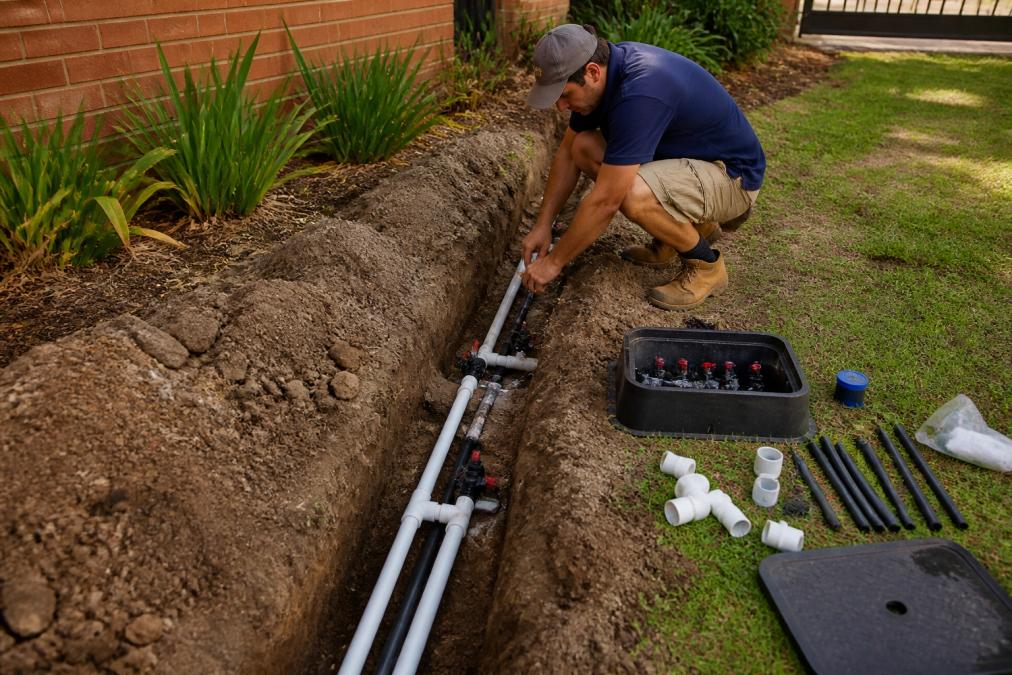
Trenching represents one of the most labour-intensive aspects of installation. Most Australian installations require pipes buried 150-300mm deep to protect them from damage and temperature fluctuations. Rocky soil, clay, or areas with dense tree roots increase trenching time and labour costs substantially.
Some properties benefit from surface-laid systems where pipes run above ground or just below mulch level, particularly in mild climates. These systems cost less to install and are easier to modify later, but they’re more visible and vulnerable to damage. Professional installers assess your property’s conditions and recommend the approach balancing cost, durability, and aesthetics.
System components and materials
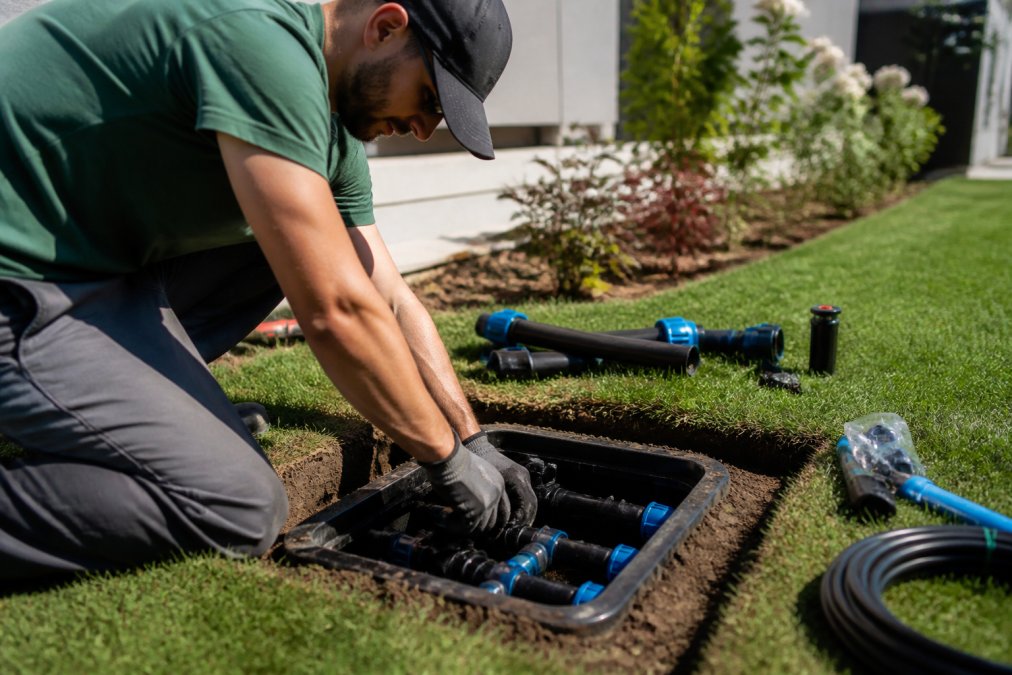
Your installed system includes numerous components beyond pipes and sprinkler heads. Main line pipes (typically PVC or polyethylene) form the backbone, with diameters sized based on water flow requirements. Solenoid valves control water flow to individual zones. Pressure regulators ensure consistent water delivery. Filters prevent sediment from clogging emitters and nozzles.
Quality matters significantly with irrigation components. Budget-grade solenoid valves fail more frequently than commercial-grade alternatives, leading to costly repairs. Professional installers specify components balancing cost with reliability, ensuring consistent performance for years.
| Component | Function | Durability Impact |
|---|---|---|
| Solenoid valves | Control water flow to zones | Frequent failures with cheap models |
| Pressure regulators | Maintain consistent water pressure | Essential for system longevity |
| Filters | Prevent sediment clogging | Reduces maintenance costs |
| Smart controllers | Automate watering schedules | Water savings justify higher cost |
| Backflow preventers | Protect mains water supply | Mandatory in most Australian regions |
Backflow prevention and regulatory compliance
Backflow prevention devices are non-negotiable in Australia. These devices prevent contaminated water from your irrigation system flowing back into mains water supply. Your local water authority specifies acceptable devices, and installation must meet their standards.
Compliance testing after installation confirms your system meets all regulatory requirements. This testing is mandatory before final approval, and non-compliant systems face disconnection. The cost of compliance, including the backflow device, installation labour, and testing fees, varies by region but represents necessary investment in system legitimacy and safety.
Benefits of Professional Irrigation Installation Australia
Professional installation delivers advantages extending far beyond simply getting water to your garden.
Customised system design and site assessment
A professional site assessment identifies your property’s unique characteristics: soil type, drainage patterns, sun exposure variations, water pressure, and existing obstacles. This assessment forms the foundation of custom system design delivering water efficiently to different garden zones based on specific needs. A customised approach prevents waste and frustration accompanying generic installations.
Professional designers consider your garden’s long-term evolution. A well-designed system accommodates future plantings and modifications without requiring complete replacement. WaterPro’s design process includes detailed consultations about your garden vision, ensuring your irrigation system supports landscaping goals.
Smart controller ROI and warranty protection
Smart irrigation controllers represent one of the highest-value components you can install. These devices learn your garden’s watering patterns, adjust schedules based on weather forecasts, and integrate soil moisture sensors to prevent overwatering. Water savings typically justify the investment within 2-3 years.
Professional installation includes controller programming specific to your system and garden requirements. Warranty protection on professionally installed systems covers both components and labour for a specified period, protecting your investment against defects and installation errors.
DIY installations often void manufacturer warranties on controllers and solenoid valves. If a component fails within the warranty period on a professionally installed system, you’re covered. On a DIY system, you bear the full replacement cost.
Maintenance and Long-Term Running Costs
Professional installation is just the beginning of your irrigation system’s lifecycle. Understanding ongoing costs helps you plan your budget realistically.
Seasonal servicing and solenoid valve replacement
Annual system servicing before and after the main growing season keeps your irrigation performing optimally. Pre-season servicing checks all connections, tests solenoid valves, verifies controller programming, and ensures water pressure is within normal ranges. Post-season servicing includes system flushing to remove sediment and winterisation where needed.
Solenoid valves occasionally fail, particularly in areas with high water mineral content. Replacement labour is straightforward once the failed valve is identified. Preventive maintenance reduces failure frequency and catches developing issues before they cause system outages.
Water usage monitoring and system upgrades
Modern smart controllers provide detailed water usage reports, showing exactly how much water your irrigation system consumes. This transparency helps identify leaks quickly; if water usage spikes without explanation, a leak is likely the cause. Early leak detection prevents water waste and protects your water bill.
System upgrades, adding new zones for garden expansions or installing soil moisture sensors, are easier and less expensive when your initial system was professionally designed. A well-designed system includes provisions for future expansion.
Why Choose Professional Installation Over DIY
The temptation to install irrigation yourself is understandable when seeing professional irrigation system installation costs. However, professional installation delivers value that DIY approaches rarely achieve.
Professional installers bring expertise in system design, component selection, and local regulatory compliance that prevents costly mistakes. They understand how soil type, water pressure, and property layout interact to determine system performance. They know which components perform reliably in Australian conditions and which budget alternatives fail prematurely. They’re familiar with local council permit requirements and water authority compliance standards, ensuring your system passes inspection.
Professional installers carry insurance and provide warranties on their work. If something goes wrong, you have recourse. DIY installations leave you solely responsible for any problems that arise.
The professional irrigation system installation cost reflects the expertise, labour, and accountability that professional installers provide. For most homeowners, this investment delivers superior results compared to attempting installation without proper knowledge and tools.
Investing in professional irrigation installation transforms how your garden receives water, but only when the system is designed and installed correctly. The professional irrigation system installation cost depends entirely on your property’s unique characteristics, but understanding the factors influencing pricing helps you evaluate quotes confidently. WaterPro’s offers free garden irrigation design consultation and works with you to create a system fitting your budget while delivering water efficiency and reliability your garden deserves. With over three decades of experience serving Melbourne properties, our qualified technicians ensure your system meets all regulatory requirements, performs reliably for years, and supports your garden’s long-term health. Contact WaterPro’s today to discuss your irrigation needs and receive a detailed quote based on your property’s specific conditions.
Frequently Asked Questions
How much does professional irrigation system installation cost in Australia?
Professional irrigation system installation costs vary significantly based on property size, system type, soil conditions, and regional factors. Pricing depends on whether you choose a simple sprinkler setup or a complex drip irrigation system with smart automation. Labour rates, excavation depth, and material quality all influence the final cost. Contact WaterPro's for a free design consultation to receive an accurate quote tailored to your specific property needs.
What factors affect irrigation system installation cost the most?
Key factors include property size (cost per square metre), soil type (harder soils require more excavation), water pressure and flow rate requirements, system complexity (zoning and automation), and regional permit requirements. Trenching depth, backflow prevention installation, and the choice between pop-up sprinklers and drip lines also significantly impact costs. A professional site assessment identifies these variables before work begins.
Is drip irrigation more expensive to install than sprinkler systems?
Drip irrigation typically costs more upfront due to the detailed pipe layout and installation labour required. However, the long-term water efficiency savings often justify the higher initial investment, especially in drought-prone Australian regions. Drip systems deliver water directly to plant roots, reducing waste and lowering your water bills over time. WaterPro's can compare both options and calculate your potential ROI with a smart controller.
Do I need a permit for irrigation system installation in Australia?
Permit requirements vary by state and local council area. Many Australian regions require permits for water extraction or system installation, particularly for systems drawing from mains water. Some areas have water restrictions affecting system design and operation. Professional installers like WaterPro's understand local regulations and can advise whether permits apply to your property and handle compliance requirements.
What ongoing costs should I expect after professional installation?
Maintenance costs include seasonal servicing, solenoid valve replacement, and occasional repairs. Water usage depends on your system type and irrigation schedule. Smart controllers can reduce water consumption by optimising watering times based on weather and soil moisture. Annual servicing typically costs less than emergency repairs. WaterPro's offers maintenance packages and post-installation support to keep your system running efficiently for years.
This article was written using GrandRanker