
Table of Contents
- What You’ll Need Before You Start Looking for Hidden Irrigation Leaks
- Signs of an Underground Water Leak in Your Irrigation System
- Step 1, Isolate Zones to Narrow Down Where the Irrigation Leak Is
- Step 2, Irrigation Leak Detection Methods You Can Try Yourself
- Step 3, Using an Underground Water Leak Detector in Australia
- Common Mistakes to Avoid When Locating Hidden Irrigation Leaks
- Cost of Irrigation Leak Detection in Australia
- Conclusion: Stop Hidden Irrigation Leaks Before They Drain Your Budget
Last Updated: July 31, 2026
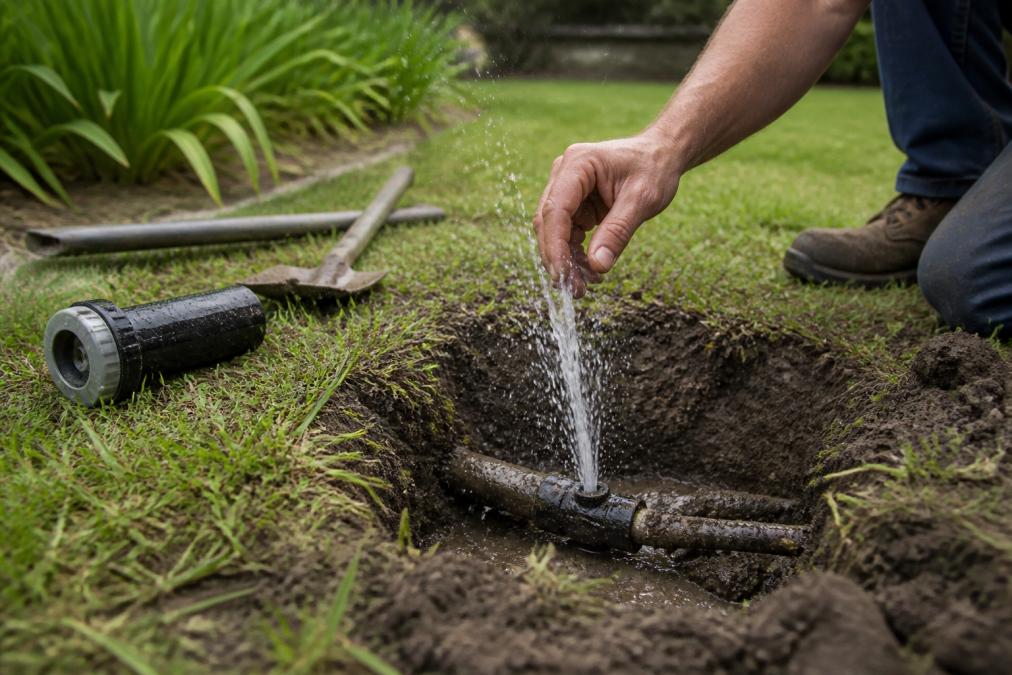
Knowing how to find hidden irrigation leaks is one of the most practically valuable skills a Melbourne homeowner can develop, yet most people only discover a problem after their water bill arrives. At WaterPro’s, we’ve spent over three decades diagnosing exactly these kinds of hidden faults across Melbourne’s suburban gardens, and the patterns are remarkably consistent. Underground irrigation leaks are deceptive: the system runs, the garden looks fine on the surface, and the damage compounds quietly beneath your feet. Below, we’ll walk you through every step of the detection process, from the tools you need to the professional-grade methods that pinpoint leaks without excavating your entire lawn.
Hidden irrigation leaks are a genuine water waste issue. According to Smart Approved WaterMark irrigation efficiency resources, a poorly maintained irrigation system can waste a significant volume of water before the fault becomes visible. That’s a real cost on your water bill and a real environmental impact, particularly under Melbourne’s seasonal water restrictions.
What most guides get wrong is treating leak detection as a single action rather than a systematic process. The reality is that you need to work through the system zone by zone, method by method, before you can confidently locate the source.
What You’ll Need Before You Start Looking for Hidden Irrigation Leaks
Preparation makes the difference between a two-hour job and an all-day frustration. Gather these before you touch anything.
Basic Tools to Have on Hand
- A flat-head and Phillips screwdriver
- Adjustable pliers and a shifting spanner
- Irrigation zone map or controller diagram
- Marker flags or garden stakes
- A notepad to record pressure readings and zone behaviour
- A soil probe or thin metal rod for checking ground moisture at depth
You don’t need specialist equipment for the initial stages. Most homeowners can complete the first two steps of detection using nothing more than what’s already in the shed.
Safety Checks Before You Begin
Turn off the irrigation controller before inspecting any fittings. If your system runs on mains pressure, locate your main stopcock so you can isolate water supply quickly. Check that no zones are scheduled to run during your inspection window: an unexpected zone activation while you’re examining a fitting can cause injury or make a small leak significantly worse. If your system includes a backflow prevention device, leave it alone unless you’re a licensed plumber. Tampering with backflow preventers can breach your obligations under Victorian plumbing regulations.
Photograph your controller settings and zone map before you start. It takes 30 seconds and saves considerable time if you accidentally reset the controller during testing.
Signs of an Underground Water Leak in Your Irrigation System
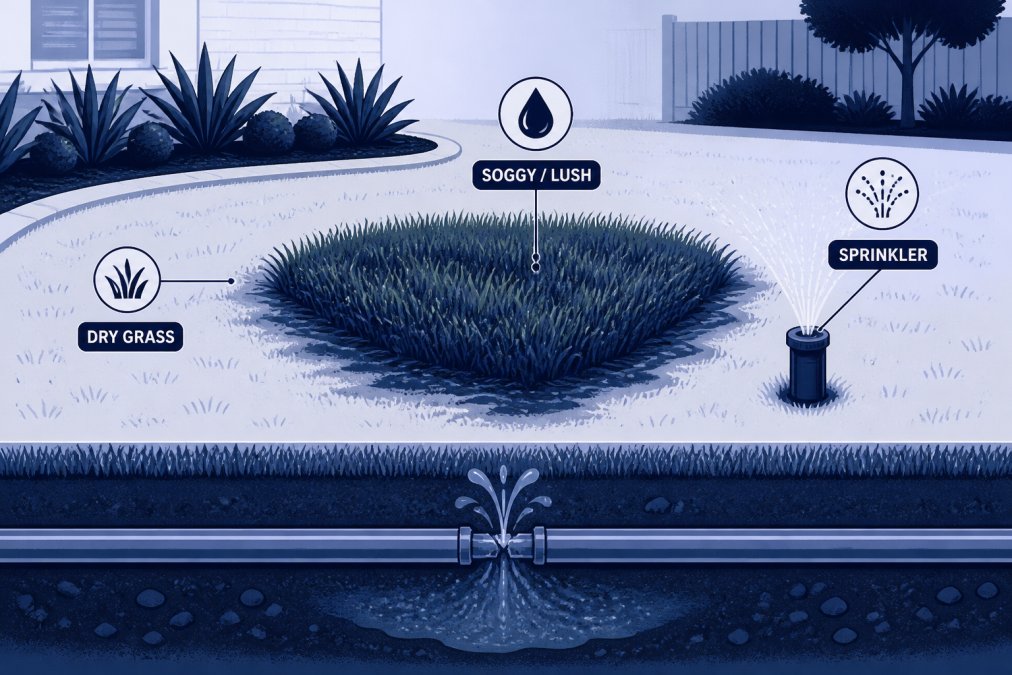
The signs of an underground water leak are often misread as good gardening. That’s the trap.
Visual Clues in Your Garden
Specific visual patterns consistently indicate a subsurface leak rather than normal variation:
- Isolated lush patches: One section of lawn is noticeably greener and thicker than surrounding areas, without any change in sunlight exposure.
- Soft or spongy ground: Pressing your foot on the soil produces a squelching sensation even days after the last irrigation cycle ran.
- Sunken or raised soil lines: Soil subsidence along a pipe route, or a linear ridge of displaced earth, often tracks directly above a leaking lateral.
- Unexplained weed growth: Persistent weeds appearing in a straight line across an otherwise managed lawn frequently follow a leaking pipe.
- Rust or mineral staining: Staining around risers or valve boxes where water is wicking up through the soil.
Unusual Water Bill Spikes
A sudden increase in your water usage that doesn’t correspond to seasonal changes or a new garden area is one of the clearest indicators of a hidden irrigation leak. Melbourne Water bills include a usage breakdown that allows you to compare quarterly consumption. If your usage has climbed without an obvious explanation, run your irrigation system manually, zone by zone, and watch the water meter during each zone’s operation. A zone with a significant underground leak will show a measurably higher flow rate than neighbouring zones of similar size.
Don’t dismiss a high water bill as a meter error before checking your irrigation system. Melbourne Water meters are accurate to within a tight tolerance, and a “meter fault” is statistically far less common than an irrigation system fault.
Step 1, Isolate Zones to Narrow Down Where the Irrigation Leak Is
Zone isolation is the single most effective first step in irrigation leak detection, and it’s the one most DIY guides skip entirely.
The logic is straightforward: your irrigation controller runs each zone independently. A leak in Zone 3 has no effect on Zone 1’s pressure or flow. By activating one zone at a time and observing the water meter, you can eliminate healthy zones quickly and focus your attention where the problem actually is.
Here’s the process:
- Ensure all zones are off and the system is at rest.
- Note the water meter reading.
- Activate Zone 1 manually from the controller. Let it run for three minutes.
- Check the meter reading and note the flow rate.
- Turn Zone 1 off. Allow two minutes for pressure to equalise.
- Repeat for each zone, recording flow rate each time.
A zone with a leak will typically show a higher-than-expected flow rate compared to other zones of similar pipe length and head count. Zones with a complete pipe break may show dramatically elevated flow, while zones with a small fitting leak will show only a modest difference. Either way, you’ve now narrowed the problem to a specific zone rather than the entire system.
This method works on virtually any residential irrigation system, including older systems installed in the 1990s that use imperial-sized fittings.
Step 2, Irrigation Leak Detection Methods You Can Try Yourself
Once you’ve isolated the suspect zone, three practical irrigation leak detection methods can help you pinpoint the fault without digging.
The Water Meter Test
The water meter test is a reliable way to confirm whether any active leak exists in the system, independent of zone isolation. Close all taps and appliances in the house. Ensure the irrigation system is off. Check your water meter and note the reading, including the low-flow indicator dial if your meter has one. Wait 30 minutes without using any water. If the meter has moved, you have an active leak somewhere in the system.
According to Victorian Building Authority guidance on plumbing and water systems, unexplained water loss that persists after isolating individual fixtures should be investigated promptly to avoid property damage and compliance issues.
Pressure Testing Your Lines
Pressure testing requires a simple irrigation pressure gauge, available from most irrigation supply stores. Attach the gauge to a riser or hose bib within the suspect zone. Run the zone and note the operating pressure. Then cap all the heads in that zone temporarily and check the residual pressure. A zone with a healthy pipe network will hold pressure steadily. A zone with an active leak will show a pressure drop, often accompanied by a hissing sound near the fault location.
This method is particularly effective for detecting leaks in lateral lines, which are the most common failure point in Melbourne’s clay-heavy soils where ground movement causes pipe joint separation.
Visual Inspection of Fittings and Risers
Walk the entire zone with the system running. Inspect every visible riser, head, and valve box. Look for:
- Water pooling around the base of a riser during operation
- A head that doesn’t fully retract after the zone turns off
- Valve boxes with standing water inside
- Fittings that show white mineral deposits indicating historical weeping
Many leaks are at the riser-to-lateral connection rather than mid-pipe, which means a thorough visual inspection finds a substantial proportion of faults without any excavation.
Step 3, Using an Underground Water Leak Detector in Australia
When visual inspection and pressure testing haven’t located the fault, an underground water leak detector is the next step.
Acoustic Listening Devices
An acoustic listening device, sometimes called a ground microphone or leak correlator, detects the sound signature of water escaping under pressure through a pipe wall or joint. The device amplifies ground-transmitted sound, allowing a technician to identify the precise location of a leak by moving the sensor along the pipe route and listening for the characteristic frequency shift that indicates a fault.
These devices are used widely in Australia by both water utilities and private irrigation specialists. They work particularly well on PVC and poly pipe systems, which transmit sound efficiently. The Water Services Association of Australia technical resources on leak detection outlines the principles behind acoustic detection and its application in residential and commercial water systems.
In practice, acoustic detection can locate a leak to within a few centimetres, which means excavation is targeted rather than exploratory. That matters enormously in established gardens where digging a trench through root systems or paving creates significant additional damage.
When to Call in a Professional with Detection Equipment
Some situations clearly require professional intervention:
- The leak is confirmed by the water meter test but not locatable by visual inspection or pressure testing
- The system is large, complex, or has multiple interconnected zones
- The pipe route passes under paving, a driveway, or a garden structure
- You’ve already attempted repairs and the leak has returned
A qualified irrigation technician with acoustic detection equipment can typically locate and diagnose a hidden irrigation leak in a single site visit. The repair itself, once the location is known, is usually straightforward.
Common Mistakes to Avoid When Locating Hidden Irrigation Leaks
The biggest mistake is digging first. Many homeowners, frustrated by a soggy patch of lawn, grab a spade and start excavating in the general area. Without confirmation of the exact leak location, this approach damages pipe networks, root systems, and occasionally underground power or communication cables.
Other frequent errors include:
- Testing all zones simultaneously: Running the full system rather than individual zones makes it impossible to isolate the problem zone.
- Ignoring the meter between tests: Skipping the water meter check means you’re relying entirely on visual observation, which misses subsurface leaks almost entirely.
- Replacing heads before checking laterals: Sprinkler heads are the obvious target, but the majority of hidden leaks occur in the lateral pipes or at subsurface fittings, not at the head itself.
- Assuming the leak is where the wet patch is: Water follows the path of least resistance through soil. The wet surface patch can appear a metre or more from the actual pipe fault, particularly in sandy or disturbed soils.
Locate before you excavate. Every additional piece of diagnostic information reduces the amount of digging required and protects the parts of your system that are functioning correctly.
Cost of Irrigation Leak Detection in Australia
Pricing for irrigation leak detection in Australia varies depending on system complexity, site access, and whether specialist acoustic equipment is required. A straightforward visual inspection and zone pressure test carried out by an irrigation technician will generally cost less than a full acoustic detection service involving specialist equipment and a detailed fault report.
For a general guide on what irrigation service work involves and what factors influence pricing, the Master Plumbers Australia consumer advice on irrigation and water systems provides useful context on what to expect from a professional assessment.
The following table summarises the detection methods covered in this guide, their typical application, and what each one is best suited for:
| Detection Method | Best For | Equipment Required | DIY Feasible? |
|---|---|---|---|
| Water meter test | Confirming any active leak exists | None | Yes |
| Zone isolation | Narrowing fault to a specific zone | Controller access | Yes |
| Pressure testing | Identifying lateral pipe faults | Pressure gauge | Yes, with gauge |
| Visual inspection | Locating surface and riser leaks | None | Yes |
| Acoustic detection | Pinpointing subsurface pipe faults | Specialist device | No – professional |
For current pricing on professional irrigation leak detection in Melbourne, contact WaterPro’s directly for an accurate quote based on your specific system and site conditions.
Hidden irrigation leaks don’t announce themselves, and the longer they go undetected, the more water and money they cost. WaterPro’s has been diagnosing and repairing irrigation faults across Melbourne since 1990, with qualified technicians who carry the right detection equipment and the experience to interpret what it finds. Whether you’ve already worked through the steps above and need a professional to finish the job, or you’d prefer to hand the whole process over from the start, book now with WaterPro’s and get a clear diagnosis without guesswork.
Frequently Asked Questions
What are the most common signs of a hidden irrigation leak?
The most telling signs include patches of grass that are noticeably greener or soggier than the surrounding lawn, unexplained spikes in your water bill, low water pressure when a zone runs, and soft or muddy ground where there should be none. You might also notice your irrigation controller running longer than usual to achieve the same coverage. Catching these early can save significant water and prevent damage to your garden's root zones.
Can I find hidden irrigation leaks myself, or do I need a professional?
Many homeowners can locate obvious irrigation leaks using a water meter test, zone isolation, and a careful visual inspection of fittings and risers. However, if the leak is deep underground or the pressure loss is subtle, professional irrigation leak detection methods, including acoustic listening devices, are far more reliable. Attempting to dig without locating the leak first can cause additional damage, so calling a qualified technician is often the smarter and more cost-effective choice.
How much does irrigation leak detection cost in Australia?
The cost of irrigation leak detection in Australia varies depending on your property size, system complexity, and whether specialist equipment is required. Basic call-out and inspection fees differ between providers and regions. Rather than relying on a rough figure that may not reflect your situation, it's best to request a specific quote from a qualified local irrigation specialist. Many reputable companies will assess the system before recommending repair or replacement, so you're not paying blind.
What tools do professionals use to find underground water leaks?
Professionals typically use acoustic leak detection devices that amplify the sound of water escaping underground pipes, allowing them to pinpoint the leak without excavation. Some technicians also use pressure testing equipment to identify which zone or pipe section is losing pressure. In more complex cases, tracer gas or thermal imaging may be employed. For most residential irrigation systems in Melbourne, acoustic detection combined with zone isolation is sufficient to locate the problem accurately.
Why has my water bill gone up if my irrigation system looks fine?
A visually intact irrigation system can still have hidden leaks in underground poly pipe, at subsurface fittings, or around solenoid valves. These leaks may not surface as visible wet patches, especially in sandy or well-draining soils. Running a simple water meter test, turning off all water inside and checking whether the meter still moves, is a quick first step. If it does, your irrigation system is the likely culprit and warrants a thorough inspection using proper irrigation leak detection methods.
This article was written using GrandRanker