
Table of Contents
- What Affects Melbourne Irrigation Repair Costs
- Common Irrigation System Problems and Repair Pricing
- DIY vs Professional Irrigation Repair: What’s Right for You
- Irrigation System Troubleshooting Guide for Common Issues
- Maintenance vs Repair: A Long-Term Cost Perspective
- When to Call a Professional Contractor
- Conclusion
Last Updated: August 5, 2026
What Affects Melbourne Irrigation Repair Costs
The cost of repairing an irrigation system in Melbourne depends on several interconnected factors beyond a simple hourly rate. Understanding what drives these costs helps you make informed decisions about whether to fix, maintain, or replace components.
The most significant variable is the type of fault. A solenoid valve replacement costs differently than diagnosing a pressure regulation issue or repairing a leak in buried pipe. Accessing the problem also matters, a sprinkler head at ground level takes minutes to reach, while a master valve buried under concrete requires excavation and substantial labour time.
System age plays a critical role. Older systems from the 1980s and 1990s often use proprietary fittings that are harder to source, and technicians may need extra time understanding non-standard configurations. A system over 20 years old may have corroded fittings that break during repair attempts, escalating costs unexpectedly.
Water pressure and flow rate issues can stem from multiple causes. A blocked nozzle might be a five-minute fix, but pinpointing a pressure drop across multiple zones requires systematic testing and diagnostic equipment, adding cost upfront but preventing unnecessary component replacement.
Your location within Melbourne affects pricing. Properties with difficult soil conditions, high water tables, or clay-heavy soils may require more complex leak detection work. Access constraints, narrow driveways, dense landscaping, or paving over irrigation lines, increase repair time. Inner-city properties often have higher labour costs than outer suburbs.
Emergency vs. scheduled repair timing is one of the largest cost multipliers. A service call during standard business hours (Monday-Friday, 7am-5pm) costs significantly less than after-hours or weekend emergency repairs. Many Melbourne contractors charge $80-$150 for diagnostic visits outside business hours, and labour rates for emergency work can be 50-100% higher than standard rates. A solenoid valve replacement costing $250-$350 during the week might cost $400-$600 on a Saturday afternoon. Planning maintenance before peak summer avoids this premium.
Melbourne’s water restrictions and council requirements also influence repair strategy. During Stage 3 or Stage 4 water restrictions (declared by Melbourne Water during dry periods), irrigation system repairs become urgent because system downtime directly impacts your garden’s survival. Some councils require irrigation systems to meet minimum efficiency standards under the Building Code of Australia (BCA). If your repair involves replacing components, the replacement must meet current water efficiency standards, potentially increasing costs if your existing system uses older, less-efficient nozzles or controllers.
Diagnostic fees vary. Some contractors charge $60-$120 for a diagnostic visit, though this fee is often waived or credited if you proceed with repairs. Clarifying this upfront prevents surprise charges.
Common Irrigation System Problems and Repair Pricing
Most Melbourne properties experience a predictable set of irrigation faults. Knowing what typically fails helps you anticipate costs and recognise when a problem warrants immediate attention.
(/blog/professional-irrigation-system-installation-cost-australia/) Problems and Repair Pricing]
Solenoid valve faults
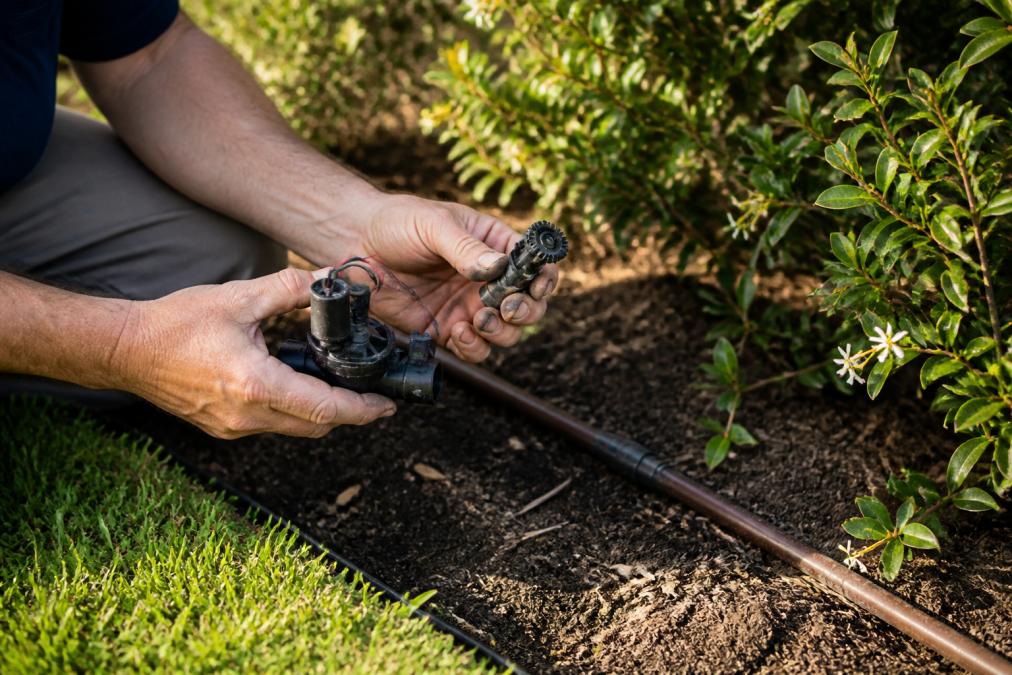
A solenoid valve controls water flow to individual zones. When it fails, that zone either won’t water at all or runs continuously. Solenoid faults account for a significant portion of irrigation repair calls across Melbourne.
The solenoid coil can burn out from electrical surges, age, or debris in the water supply. Replacement involves sourcing a compatible valve assembly and installing it, which typically requires draining the system and disconnecting fittings. Some systems allow cartridge replacement without full valve removal, reducing labour time. If the solenoid coil is at fault but the valve body is sound, replacing just the coil costs less than a full valve replacement.
Leak detection and pipe repairs
Leaks in buried dripline or mainline pipe are common, particularly in Melbourne’s variable soil conditions. Detecting where a leak occurs requires systematic zone testing and sometimes pressure testing equipment.
A small leak in dripline might be a simple splice repair using connectors. A rupture in mainline pipe often requires excavation and replacement of the damaged section. The depth of burial, soil type, and whether the pipe runs under paving all affect repair complexity and cost. Professional leak detection using pressure gauges and listening devices typically costs $150-$250 but pinpoints the exact location, making the repair faster and cheaper than trial-and-error excavation.
Controller and timer issues
Modern irrigation controllers send signals to solenoid valves. Faults can be electrical (power supply, wiring), software (programming errors, corrupted settings), or hardware (faulty relay boards, damaged terminals).
A controller that won’t power on might have a failed transformer or tripped circuit breaker. One that powers on but won’t trigger zones might have wiring faults or a failed relay. Some issues are simple fixes, resetting the controller, replacing a blown fuse, or correcting programming errors. Others require component replacement or full controller replacement. Wiring faults between the controller and solenoid valves are also common, with damaged insulation from weather exposure, rodent damage, or poor installation creating intermittent faults that are time-consuming to diagnose.
Sprinkler nozzle and dripline damage
Sprinkler nozzles clog from mineral deposits, sediment, or debris. Dripline gets pinched, crushed, or damaged during garden work. Both are relatively inexpensive to repair.
Nozzle cleaning or replacement takes minutes per head. Dripline damage requires splicing or replacing the damaged section. If the damage is extensive or the dripline is very old, replacing that entire zone’s dripline might be more cost-effective than patching multiple sections.
DIY vs Professional Irrigation Repair: What’s Right for You
The decision to repair your system yourself or call a professional depends on the fault type, your skill level, and the risk of making things worse.
Simple tasks suit DIY work. Cleaning a clogged sprinkler nozzle, replacing a damaged dripline connector, or resetting a controller are low-risk jobs requiring basic tools and minimal material costs.
Diagnosis is where DIY often fails. Identifying whether a zone won’t water because of a faulty solenoid, a blocked nozzle, a pressure regulation issue, or a broken wire requires systematic troubleshooting. Many homeowners spend hours on failed diagnosis, then call a professional anyway.
Electrical work carries risk. If you’re uncomfortable working with 24-volt wiring or checking continuity with a multimeter, leave controller and wiring faults to a professional. Incorrect wiring can damage the controller or create safety hazards.
Excavation and pipe repair require experience. Digging to find a buried mainline without damaging it takes skill. Splicing or replacing pipe incorrectly leads to leaks that worsen the original problem. Professional contractors have the right tools and know how to work in Melbourne’s variable soil conditions.
The real cost of DIY isn’t just materials, it’s your time, the risk of damage, and the possibility of needing professional intervention to fix a failed DIY repair. For complex issues, professional assessment saves money in the long run.
Irrigation System Troubleshooting Guide for Common Issues
Before calling a technician, you can perform basic troubleshooting that narrows down the problem and sometimes fixes it.
Zone testing and pressure regulation
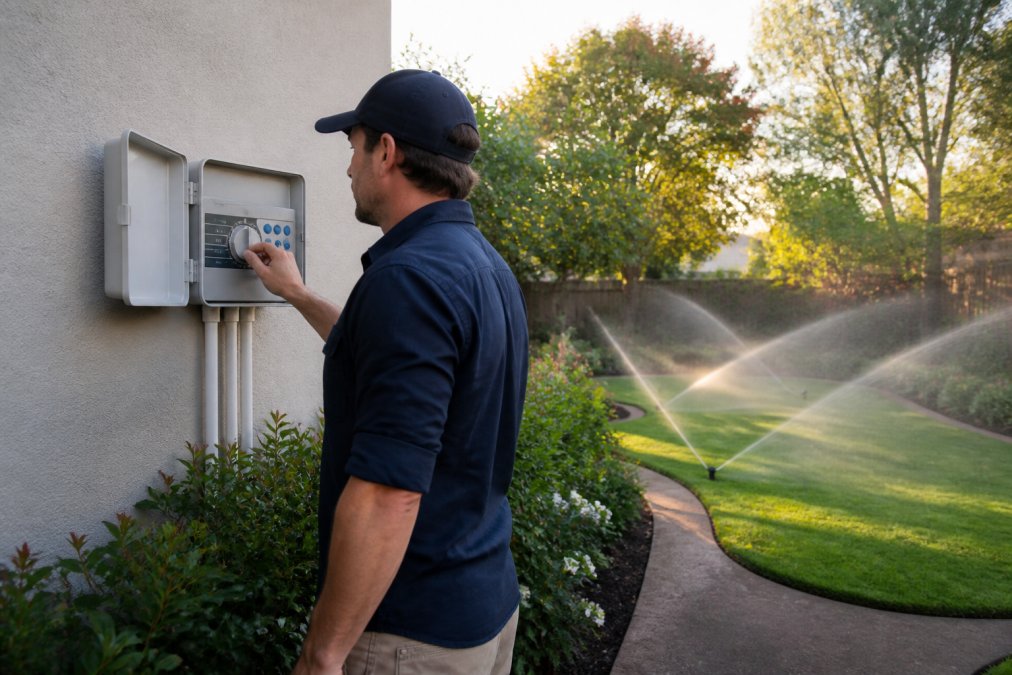
Start by checking whether individual zones water correctly. Turn on each zone manually using the controller. Note which zones work and which don’t.
A zone that won’t water at all suggests a solenoid valve fault, a blocked line, or a wiring issue. A zone that waters weakly suggests a pressure regulation problem or a partial blockage. A zone that runs continuously suggests a solenoid valve stuck open or a controller relay failure.
If all zones have weak pressure, check whether the mainline shut-off valve is fully open and whether the water supply is adequate. You can check individual zone pressure using a pressure gauge connected to a test port, if your system has one.
Seasonal adjustment and winterization
Melbourne’s climate requires seasonal adjustments. Summer watering needs are higher than winter, and system settings should reflect this.
In winter, reduce watering frequency and duration. Many systems can be programmed with seasonal schedules that automatically adjust. Check that drainage points are clear so water doesn’t pool in low sections of pipe. Before spring, flush the system to clear any sediment that accumulated over winter, preventing nozzle clogging and reducing pressure drops.
Maintenance vs Repair: A Long-Term Cost Perspective
Preventative maintenance costs less than emergency repairs, but many homeowners skip it until something breaks.
A maintenance program typically includes seasonal adjustments, nozzle cleaning, filter inspection, and system pressure checks. Done annually or semi-annually, maintenance catches small faults before they become expensive problems. A solenoid valve showing early signs of wear can be replaced during maintenance, preventing a zone failure mid-summer.
Maintenance also extends component lifespan. Regular cleaning of filters and nozzles reduces wear on solenoid valves and improves water efficiency. The cost of maintenance is predictable and budgetable. The cost of emergency repair, a burst mainline in summer, a failed controller in drought conditions, is unpredictable and often urgent, typically incurring higher labour rates.
Water efficiency gains from maintenance also matter. A system running at correct pressure with clean nozzles uses less water than one that’s neglected. Over a season, this reduces your water bill and supports Melbourne’s water conservation goals.
WaterPro’s recommends a maintenance schedule tailored to your system’s age and condition. Older systems benefit from more frequent checks, while newer ones may need less frequent service.
When to Call a Professional Contractor
Some irrigation faults demand professional expertise. Knowing when to call saves time and prevents costly mistakes.
Call a professional if a zone won’t water and you’ve confirmed the controller is sending signals and the shut-off valve is open. This indicates a solenoid fault, a blockage you can’t locate, or a wiring issue, all requiring diagnostic equipment or specialised knowledge. A technician can test the solenoid coil with a multimeter and determine whether a $120-$200 coil replacement will solve the problem or whether the entire valve body needs replacement ($250-$400).
If you suspect a leak but can’t find it, professional leak detection is worthwhile. Guessing and digging damages your garden and delays the actual repair.
Controller faults involving electrical work are best left to professionals. Wiring errors can damage expensive components or create safety hazards. A faulty relay board or transformer replacement usually costs $200-$400, but misdiagnosis can lead to unnecessary full controller replacement ($800-$1,500).
Component lifespan is critical to the repair-vs-replace decision. Understanding how old your components are helps you decide whether to invest in repair or plan for replacement:
-
Solenoid valves: Typically last 10-15 years. If your system is 12+ years old and a solenoid fails, check the age of other solenoids. If multiple valves are nearing 15 years, replacing all solenoids now ($120-$200 each) may be more cost-effective than repairing one now and facing cascading failures over the next 2-3 years.
-
Irrigation controllers: Modern controllers last 10-12 years. If your controller is over 10 years old and develops faults, repair costs ($200-$500) may approach 40-50% of a new controller’s cost ($800-$1,500). At that threshold, replacement often makes sense, especially if the old controller lacks modern features like weather-based scheduling, which reduces water waste by 15-30%.
-
Dripline and mainline pipe: PVC and polyethylene dripline typically last 8-12 years in Melbourne’s climate before UV exposure and soil movement cause brittleness and cracks. If you’re repairing dripline in a zone where the line is over 10 years old, consider replacing the entire zone’s dripline ($300-$600 per zone) rather than patching.
-
Sprinkler heads and nozzles: These last 8-10 years before internal seals degrade and flow rates drop. If you’re replacing more than 30% of heads in a zone, full zone replacement ($400-$800) is often more economical.
If your system is more than 15 years old and developing multiple faults, professional assessment is essential. A technician can evaluate whether repairs will continue indefinitely or whether system replacement offers better long-term value. Replacing an aging system costs $3,000-$8,000 depending on property size and complexity, but a new system uses 20-30% less water than an old one, recovering costs through water savings over 5-7 years, especially during drought periods when water prices rise.
Emergency situations demand immediate professional help: a burst mainline flooding your property, a controller failure mid-summer during water restrictions, or a system that won’t shut off. Attempting DIY fixes in emergencies often makes things worse and increases final repair costs by 50-100%.
Water waste from leaks justifies professional repair quickly. A small leak in mainline pipe wastes 500-1,000 litres per day, adding $15-$30 monthly to your water bill. A professional repair ($300-$600) pays for itself in 10-20 days of avoided water waste.
Professional contractors bring diagnostic equipment, spare parts, and experience with Melbourne’s varied soil and water conditions. They can often identify and fix problems faster than you can troubleshoot alone, and they back their work with warranties (typically 12 months on parts and labour).
Frequently Asked Questions
How much does irrigation repair cost in Melbourne?
Irrigation repair costs in Melbourne depend on several factors including the type of problem, system complexity, and whether the issue requires parts replacement. A simple call-out fee covers the technician's visit and initial diagnosis. More complex repairs involving component replacement or leak detection will cost more. For current pricing specific to your situation, contact a local professional contractor who can assess your system and provide an accurate quote based on your exact needs.
What are the typical hourly labour rates for irrigation technicians in Victoria?
Labour rates for irrigation technicians in Victoria vary depending on the contractor's experience, qualifications, and the complexity of the work. Call-out fees typically cover the initial service visit and diagnosis. Beyond that, technicians charge hourly rates for repairs, maintenance, and system adjustments. Rates may differ for emergency or after-hours service. Contact local irrigation professionals for their current rates, as pricing varies between contractors and depends on the specific work required.
Is it cheaper to repair or replace an old irrigation system?
Whether to repair or replace depends on your system's age, the cost of the repair, and how often problems occur. A system from the 1990s can often be repaired if individual components fail, but frequent repairs across multiple zones may make replacement more economical long-term. Consider the system's lifespan: most modern irrigation systems last 15-20 years. If your system is nearing the end of its life and repair costs are mounting, replacement might be the better investment. A professional audit can help you make this decision.
Can an old sprinkler system be repaired?
Yes, older sprinkler systems can typically be repaired as long as replacement parts are available. Many systems from the 1980s and 1990s are still serviceable because manufacturers continue to produce compatible components. However, availability may be limited for very old or uncommon systems. A qualified technician can assess whether your system is worth repairing or if replacement parts would be difficult to source. Even older systems can be upgraded with modern controllers and nozzles to improve water efficiency and reliability.
This article was written using GrandRanker