
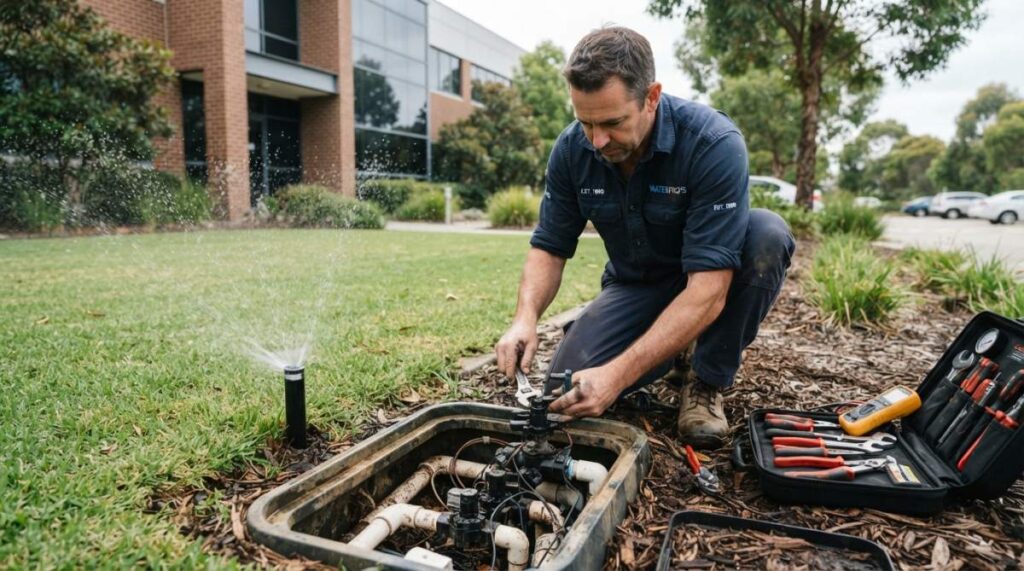
Table of Contents
- Why Irrigation System Maintenance Matters for Commercial Properties
- Common Irrigation System Problems and Early Warning Signs
- Seasonal System Inspections and Preventative Maintenance
- Water-Efficient Irrigation for Commercial Australia
- Irrigation System Troubleshooting for Commercial Landscapes
- Commercial Irrigation Services Australia: What to Expect
- Commercial Landscape Irrigation Maintenance Cost and ROI
- Creating Your Irrigation System Maintenance Plan
Irrigation System Maintenance for Commercial Properties
Last Updated: July 28, 2026
Why Irrigation System Maintenance Matters for Commercial Properties
Irrigation system maintenance for commercial properties is far more than a seasonal checkbox. It’s asset protection, operational efficiency, and regulatory compliance wrapped into one strategic responsibility. A commercial property’s irrigation infrastructure represents a substantial capital investment, often tens of thousands of dollars, and neglecting it creates cascading problems: water waste, compliance violations, landscape damage, and emergency repair costs that dwarf routine maintenance spending.
At WaterPro’s, we’ve worked with Melbourne commercial property owners for over three decades and seen the pattern repeatedly. Properties that invest in preventative irrigation system maintenance experience 30-40% lower annual water costs, fewer emergency breakdowns, and landscapes that hold their value. Properties that defer maintenance typically face expensive system failures within 18-24 months.
Commercial irrigation systems operate under conditions that accelerate wear. They run more frequently than residential systems, handle higher water volumes, and face tighter regulatory scrutiny. Without a structured maintenance plan, you’re running critical infrastructure blind.
Commercial properties in Australia must comply with local water restriction regulations. Many councils impose mandatory irrigation audits and water efficiency targets. A documented maintenance plan protects you during compliance audits and demonstrates due diligence to regulators.
Common Irrigation System Problems and Early Warning Signs
Most irrigation failures announce themselves through small signs that compound into major problems if ignored.
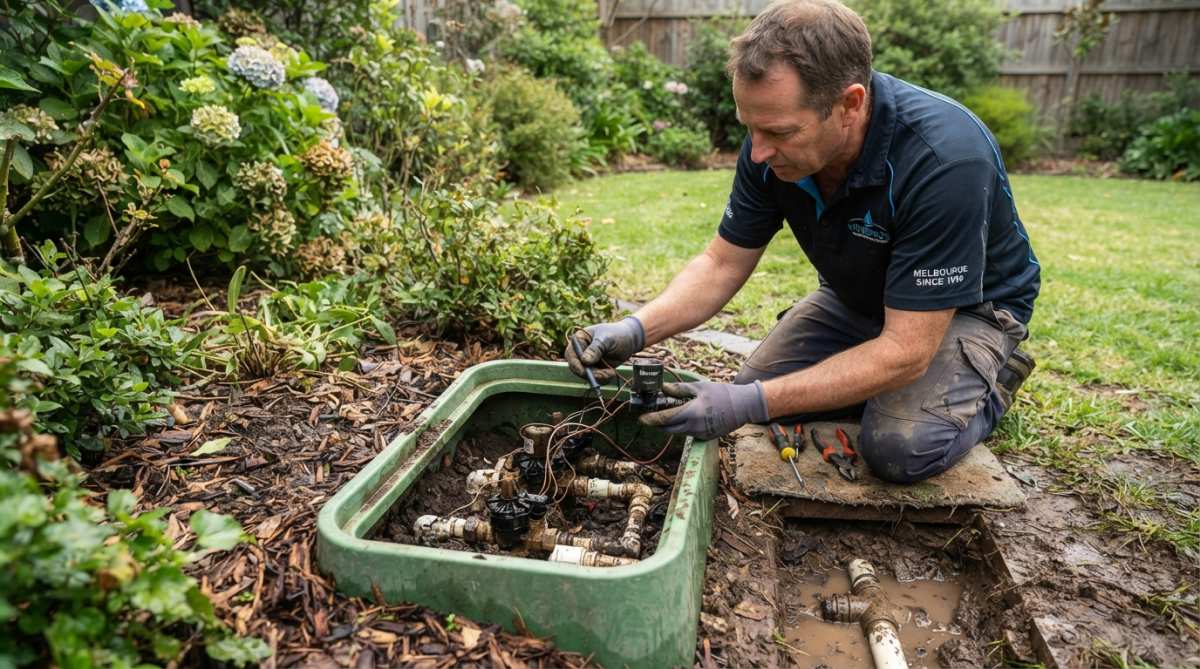
Leak detection is foundational. A single pinhole leak in a main line can waste thousands of litres monthly. Warning signs include areas of landscape that stay greener despite identical sun exposure, soggy patches that don’t drain, unexpected water bill spikes, or soil erosion around valve boxes.
Valve and controller issues manifest as inconsistent zone activation, failure to turn off, or skipped sections. A faulty solenoid valve or programming error causes zones to run longer than intended, wasting water and stressing the landscape.
Sprinkler head and nozzle problems are most visible: clogged nozzles create dry spots, misaligned heads water pavement instead of gardens, and broken risers leave heads below grade where they clog with sediment.
Many commercial properties operate on autopilot with the same schedule year-round, regardless of rainfall or season. This guarantees inefficiency and often violates water restrictions requiring seasonal adjustments.
Seasonal System Inspections and Preventative Maintenance
A structured inspection schedule is the backbone of any maintenance program.
Pre-season checks happen before peak irrigation demand, typically late August or early September in Australia. Verify all controllers function, test each zone for coverage, check for visible leaks or damage, and ensure backflow prevention devices operate.
Post-season checks occur after peak demand ends, usually late April or May. Drain irrigation lines in freeze-prone areas, service controllers for winter storage, and document damage for next season’s repairs.
| Task | Frequency | Duration | Best Timing |
|---|---|---|---|
| Visual system inspection | Monthly | 30-45 min | First week of month |
| Zone testing and coverage audit | Quarterly | 1-2 hours | Start of each season |
| Valve and controller servicing | Annually | 2-3 hours | Pre-season (August-September) |
| Backflow prevention testing | Annually | 30 min | As per local regulations |
| Drip line flushing | Bi-annually | 1-2 hours | Spring and autumn |
| Full system audit | Annually | 3-4 hours | Post-season (May) |
Documentation proves compliance during audits and helps technicians diagnose recurring problems. Keep records of every inspection, repair, and adjustment.
The single biggest maintenance mistake is treating your irrigation system as “set and forget.” Commercial landscapes change seasonally, rainfall varies, and system components degrade predictably. A schedule keeps you ahead of problems instead of reacting to failures.
Water-Efficient Irrigation for Commercial Australia
Water efficiency is both environmental responsibility and economic necessity. Australian water restrictions are tightening, and utility costs continue rising. A water-efficient irrigation system can reduce consumption by 20-30% while improving landscape health.
Drip irrigation is the cornerstone of modern efficiency. Unlike spray irrigation, which loses 20-30% of water to evaporation and wind drift, drip systems deliver water directly to plant root zones. Hybrid systems combining spray zones for turf and drip for garden beds are increasingly standard.
Soil moisture sensors take efficiency beyond scheduling. These devices measure actual soil water content and adjust irrigation in real time. A property with sensors might discover its controller’s standard schedule overwatered by 40% during rainy weeks, allowing the system to skip cycles and save water.
Smart controllers integrated with weather data represent the next level. These systems receive rainfall and temperature forecasts, then adjust schedules automatically. If rain is predicted, the system delays irrigation. If a heatwave arrives, it increases frequency. Water savings typically pay for the controller within 18-24 months.
System optimization often reveals different zones have wildly different water needs. A shaded garden bed might need 60% less water than sun-exposed turf. A properly optimized system matches water delivery to actual plant demand. Properties implementing soil moisture monitoring alongside smart controllers see average water consumption reductions of 25-35% without compromising landscape quality.
Irrigation System Troubleshooting for Commercial Landscapes
When something goes wrong, systematic diagnosis beats guesswork.
Irrigation audits measure water application rates across each zone, identify coverage gaps, check system pressure, and assess controller programming. Many commercial properties discover their system is significantly oversized for current landscape needs. A property originally landscaped for dense turf but now featuring hardscaping or native plantings still delivers water as if the original landscape remained. An audit allows recalibration.
Backflow prevention is both a maintenance task and safety requirement. Australian plumbing codes require backflow prevention devices on all irrigation systems to prevent contaminated water from flowing back into the potable water supply. These devices require annual testing and certification.
Drainage improvements are often overlooked but critical. Poor drainage makes irrigation maintenance meaningless; water sits instead of infiltrating, creating waterlogged soil, root disease, and erosion.
A common mistake is assuming that because water is being delivered, the system works correctly. Many commercial properties operate with significant coverage gaps and dry patches while other areas are overwatered. These problems are invisible until you test each zone with a catch can or pressure gauge.
Commercial Irrigation Services Australia: What to Expect
Professional irrigation services range from basic repairs to comprehensive system design and installation.
Professional system design and installation is essential for new properties or major renovations. A qualified designer assesses landscape water needs, soil conditions, sun exposure, and plant types, then specifies a system delivering the right amount of water to the right places.
Ongoing repair and emergency response services keep systems running, including leak detection and repair, valve replacement, controller reprogramming, sprinkler head adjustment, and line flushing. Most providers offer 24-hour emergency response for burst lines or system failures.
WaterPro’s has provided comprehensive irrigation maintenance to Melbourne commercial properties since 1990. Our qualified technicians offer design, installation, maintenance, and repair services tailored to your property’s specific needs. We’re Onga Master Dealers with access to many replacement products, and we diagnose problems accurately rather than recommending unnecessary replacements.
The difference between good and mediocre service providers often comes down to diagnostic capability. An experienced technician identifies root causes quickly; an inexperienced provider might recommend replacing components that simply need adjustment or cleaning.
Commercial Landscape Irrigation Maintenance Cost and ROI
The cost-benefit analysis is straightforward: preventative maintenance costs less than emergency repairs plus landscape replacement.
A single burst main line costs $2,000-$5,000 to excavate and repair. A landscape killed by weeks without irrigation might cost $10,000-$30,000 to replace. A structured maintenance program costs roughly $800-$1,500 annually for a typical commercial property.
Water savings alone often exceed maintenance costs. A property reducing irrigation consumption by 25% might save $3,000-$5,000 annually on water bills. This payback occurs within the first year.
A documented irrigation maintenance program demonstrates environmental responsibility and cost control, both key ESG metrics. Properties showing measurable water conservation have stronger sustainability credentials.
A well-maintained irrigation system lasts 15-20 years. A neglected system often fails catastrophically within 8-10 years, requiring full replacement. The difference in total cost of ownership is substantial.
Creating Your Irrigation System Maintenance Plan
Building an effective maintenance plan requires four steps: baseline assessment, schedule creation, performance monitoring, and ongoing partnership with qualified technicians.
Step 1: Conduct a baseline irrigation audit
Start with a professional audit measuring your system’s current performance:
- Zone-by-zone water application rate testing
- System pressure assessment at key points
- Controller programming review
- Identification of coverage gaps and overwatered areas
- Backflow prevention compliance assessment
- Soil and drainage evaluation
The audit report becomes your baseline, documenting existing problems and establishing metrics you’ll track over time.
Step 2: Establish a seasonal maintenance schedule
Create a calendar specifying which tasks happen when. Customize the maintenance schedule table for your property’s specific needs. Assign responsibility, whether internal staff or external service provider, and document clearly so it survives staff turnover.
Step 3: Monitor and document system performance
Monthly visual inspections take 30-45 minutes and catch most developing problems. Walk the property, observe each zone’s performance, check for visible leaks or damage, and note coverage issues.
Quarterly zone testing provides crucial data. Keep a simple maintenance log recording:
- Date and type of inspection
- Issues identified
- Repairs completed
- Water application measurements
- Any schedule adjustments made
- Technician name and notes
Step 4: Partner with qualified technicians
Don’t attempt complex repairs or system optimization alone. When selecting a technician or service provider, ask about years of experience with commercial systems, certifications, emergency response availability, warranty on repairs and parts, and references from other commercial properties.
A good technician becomes a partner in your maintenance strategy, identifying upcoming problems during routine maintenance and recommending cost-effective upgrades.
Irrigation system maintenance for commercial properties is an ongoing commitment that pays for itself through water savings, landscape preservation, and avoided emergency repairs. A structured approach, baseline assessment, regular inspections, documented maintenance, and partnership with qualified technicians, transforms irrigation from a liability into a reliable, efficient asset.
If your property’s irrigation system hasn’t been professionally assessed in the past 12 months, or if you’re uncertain whether your current maintenance approach is adequate, WaterPro’s can help. We offer comprehensive irrigation audits and maintenance plans tailored to your property’s specific needs. With over three decades of experience serving Melbourne commercial properties, our qualified technicians understand the unique demands of commercial landscape irrigation. Contact WaterPro’s today to schedule a baseline audit and discover where your system stands.
Frequently Asked Questions
How often should commercial irrigation systems be serviced in Australia?
Most commercial irrigation systems benefit from professional servicing at least twice yearly, before the growing season begins and after peak use ends. However, frequency depends on your system's age, complexity, and local water restrictions. High-traffic commercial properties or those in water-stressed regions may require quarterly inspections. A qualified technician can recommend a maintenance schedule tailored to your specific irrigation infrastructure and landscape needs.
What are the main benefits of regular irrigation system maintenance for commercial properties?
Regular maintenance protects your irrigation infrastructure investment, prevents costly emergency repairs, and ensures consistent landscape health. Preventative maintenance reduces water waste through leak detection and system optimization, lowering utility costs significantly. It also ensures compliance with Australian water restrictions and regulations, protects property value, and maintains professional landscape aesthetics. Well-maintained systems operate more efficiently, delivering water precisely where needed through proper valve operation, controller programming, and nozzle adjustment.
What should I include in a commercial irrigation maintenance checklist?
A comprehensive checklist should cover: system inspection for visible leaks and pipe damage, valve and controller function testing, sprinkler head alignment and nozzle condition assessment, backflow prevention device verification, soil moisture sensor calibration (if using smart controllers), drainage inspection, and water pressure testing. Seasonal adjustments to controller programming based on weather patterns are essential. Document all findings and maintenance performed. For strata property maintenance, include common area system checks and resident communication about watering schedules.
How can I reduce utility costs through water-efficient irrigation for commercial Australia?
Implement drip irrigation where possible to minimise evaporation and target water directly to plant roots. Install soil moisture sensors and smart controllers that adjust watering based on real-time conditions rather than fixed schedules. Conduct an irrigation audit to identify and repair leaks promptly, even small leaks waste significant water over time. Optimise nozzle selection and spacing to match your landscape's actual water needs. These water management strategies reduce utility bills while supporting sustainability goals and compliance with local water conservation regulations.
What should I expect when hiring commercial irrigation services Australia?
Professional commercial irrigation services should include comprehensive system design tailored to your property's layout and soil conditions, expert installation by qualified technicians, and ongoing maintenance support. Expect detailed irrigation audits that identify inefficiencies, prompt leak detection and repair, seasonal system inspections, and emergency response availability. Reputable providers offer transparent communication, use quality replacement products, and can advise on smart irrigation technology integration and water efficiency improvements. They should explain findings clearly and provide maintenance recommendations backed by industry experience.
Is it better to maintain my existing irrigation system or replace it?
A cost-benefit analysis should compare repair costs against replacement expenses and consider system age, frequency of breakdowns, and water efficiency. Systems over 15-20 years old often become increasingly costly to maintain, especially if parts are difficult to source. However, well-maintained systems can perform reliably for decades. Modern smart controllers and drip irrigation upgrades can improve efficiency without full replacement. A qualified technician can assess your system's condition and recommend whether maintenance, targeted upgrades, or replacement offers the best long-term value for your commercial property.
This article was written using GrandRanker