
Table of Contents
- Why homeowners replace Pro Pumpz with alternatives
- Submersible vs surface irrigation pumps
- Top irrigation pump alternatives
- How to choose an irrigation pump for your needs
- Calculating irrigation pump flow rate and pressure requirements
- Installation, maintenance and longevity considerations
- Conclusion
Last Updated: August 14, 2026
Why homeowners replace Pro Pumpz with alternatives
Homeowners switch away from Pro Pumpz when their pump is undersized, can’t handle their water source, corrodes in their climate, or doesn’t match their specific application. The market offers submersible pumps, surface pumps, variable-speed systems, and centrifugal options, each solving different problems.
At WaterPro’s, we’ve installed hundreds of irrigation systems across Melbourne since 1990. We see the same pattern repeatedly: homeowners inherit undersized pumps or systems that struggle with sandy bores, high-pressure demands, or inconsistent water sources. The real question isn’t whether alternatives exist, they do, in abundance, but which one solves your specific problem.
Before replacing your pump, diagnose the actual problem. Is it undersized for your flow needs? Failing to handle your water source? Corroding in your climate? The answer determines which alternative will actually work better.
Submersible vs surface irrigation pumps
Submersible pumps sit underwater in bores, tanks, or dams and push water upward. Surface pumps sit above ground and pull water toward them through suction. This difference affects installation, maintenance, power requirements, and what water sources they can handle.
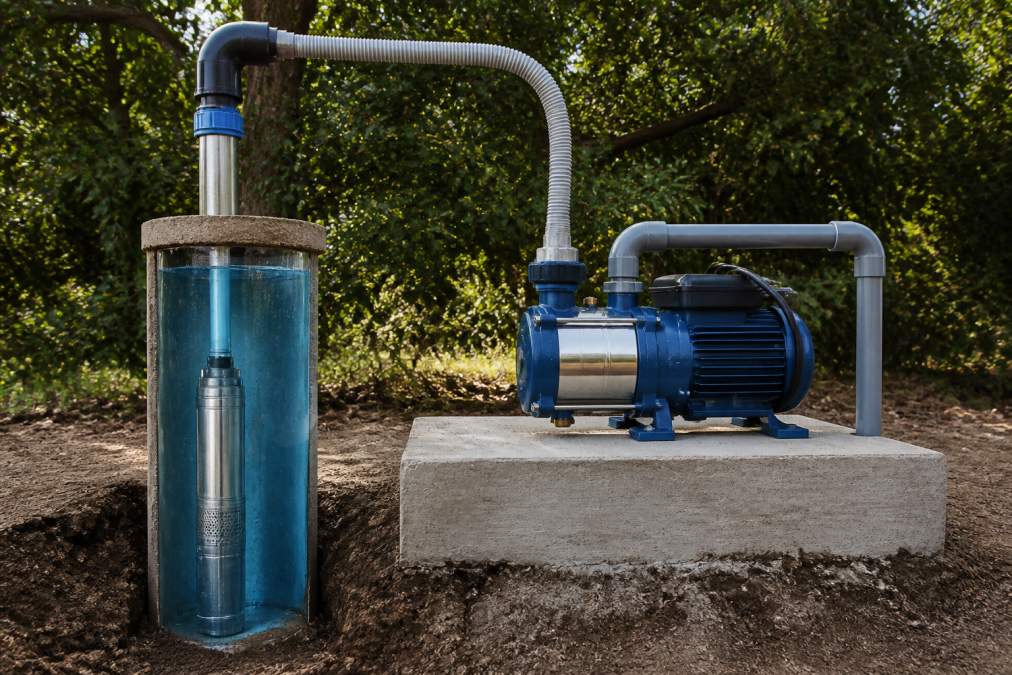
Submersible pumps excel in demanding conditions. They handle sandy water without clogging easily, work in deep bores where surface pumps can’t reach, and run quietly. Franklin Electric submersible pumps use Tri-Seal technology specifically designed to protect against sand, critical for Australian bores. The trade-off: they’re harder to service because you need to pull them out of the water.
Surface pumps offer easier maintenance and flexibility. You can access them without excavation and install them almost anywhere above ground. Grundfos JP Series and Davey SJ Silver Series pumps are popular because they’re self-priming and can draw water from a distance. The limitation: surface pumps typically have a suction lift limit around 8-9 metres.
For most residential Melbourne properties with tanks or shallow water sources, a surface pump works fine. For deep bores or sandy conditions, submersible is the only realistic choice.
Submersible pumps handle harsh conditions and depth; surface pumps offer easier maintenance and flexibility. Your water source depth and condition determine which type will work for your property.
Top irrigation pump alternatives
Grundfos JP Series for consistent pressure
The Grundfos JP Series delivers reliable, consistent water pressure without fuss. These self-priming jet pumps integrate a PM1 Pressure Manager that automatically starts and stops based on demand. The JP Series comes in multiple power outputs (0.42kW to 1.01kW), so you can match the pump to your actual needs rather than oversizing.
For rainwater tank supply or shallow well applications, the 0.56kW or 0.75kW models handle most residential gardens. A typical 0.75kW Grundfos JP delivers around 60-80 litres per minute, enough for simultaneous use across multiple garden zones. Setup typically takes 2-3 hours including pressure tank installation and testing.
The one drawback: initial cost is higher than basic jet pumps. For a property where you want the system to work without constant attention, that investment usually pays back through years of trouble-free operation.
Davey SJ Silver Series for corrosion resistance
Davey built the SJ Silver Series specifically for Australian conditions. The pump casing and impeller are stainless steel (AISI 304 grade), which resists corrosion that eats through standard cast iron pumps in coastal properties or areas with mineral-heavy water. If you’re near the coast or your water is discoloured or mineral-rich, corrosion is a certainty with standard pumps.
The SJ Silver includes automatic pressure control and thermal overload protection. A typical 0.75kW model delivers 50-70 litres per minute. Installation takes 2-3 hours for a qualified technician.
The trade-off is noise. If your pump location is near a bedroom or outdoor entertainment area, that matters. For a pump tucked away in a garden shed, noise is irrelevant.
DAB Esybox for energy efficiency
The DAB Esybox uses variable-speed technology that adjusts motor speed based on actual demand. Most pumps run at full power whenever they’re on; the Esybox runs slower when demand is low, consuming 20-40% less power over time compared to fixed-speed pumps.
The pump is compact, self-priming, and extremely quiet at 43 dB. It delivers constant pressure regardless of demand. Installation requires a technician who understands variable-speed systems and typically takes 3-4 hours.
Cost is the main consideration. The Esybox is significantly more expensive than Grundfos JP or Davey SJ options. For a small suburban block, energy savings might take 5-7 years to offset the higher purchase price. For larger properties with year-round irrigation, payback is faster.
Onga Hi-Flo for high-flow water transfer
Onga’s Hi-Flo centrifugal pumps are engineered for volume. The Onga 142 Hi-Flo delivers up to 415 litres per minute, roughly 6-8 times the flow of a typical residential jet pump. Use Hi-Flo pumps when you need to fill large tanks quickly, supply multiple high-demand zones simultaneously, or transfer water across distance.
The pump uses corrosion-resistant materials and an award-winning impeller design. Installation is straightforward and typically takes 2-3 hours.
The limitation: high flow comes with trade-offs. At maximum output, Hi-Flo pumps consume more power than smaller alternatives and are less suitable for applications requiring fine pressure control. If you’re watering a small residential garden with drip irrigation, Hi-Flo is overkill. If you’re moving water or supplying multiple zones with simultaneous demand, it’s ideal.
Franklin Electric submersible pumps for bore applications
Franklin Electric submersible pumps are purpose-built for bores. The Tri-Seal technology uses a floating-stage system that protects the pump’s internals from sand and debris, extending operational life even in harsh conditions. Australian bores often contain sand, and Franklin Electric’s design handles it, operating for 10-15 years in sandy conditions where cheaper submersibles might fail within 2-3 years.
Installation requires a bore. A technician drops the pump down, connects the rising main, wires the control box, and tests. Setup takes 2-4 hours depending on bore depth. These pumps are typically supplied on a price-on-application basis because specifications vary widely.
Reefe EJP300E for demanding irrigation
The Reefe EJP300E is a self-priming shallow-well pump built for high-demand irrigation. It delivers up to 150 litres per minute and can handle suction lift up to 9 metres, making it suitable for drawing from dams, creeks, or underground storage tanks. Use the EJP300E when drawing from a dam or creek to supply extensive garden irrigation, or when filling large tanks quickly.
Setup involves mounting the pump above ground near your water source, priming it, and connecting inlet and discharge pipes. A technician typically completes installation in 2-3 hours.
The trade-off is noise and power consumption. The EJP300E runs at full speed whenever it’s on, so it’s louder than variable-speed alternatives and uses more electricity than needed during low-demand periods.
How to choose an irrigation pump for your needs
Choosing the right irrigation pump comes down to matching three factors: your water source, your flow requirements, and your pressure needs.
Assessing your water source and suction lift
Your water source determines which pump types are possible. If you’re drawing from a tank above ground or a shallow well within 8 metres of the pump, a surface pump works. If your bore is 20 metres deep or you’re drawing from a dam, you need a submersible pump or a surface pump with very short suction distance.
Suction lift is the vertical distance water must travel upward to reach the pump’s inlet. Most surface pumps have a practical limit around 8-9 metres; beyond that, the pump loses prime. Water quality matters too. Sandy bores need pumps designed for sand like Franklin Electric submersibles. Clean rainwater from a tank is forgiving; you have more options. Coastal properties with mineral-heavy water need stainless-steel construction like Davey’s SJ Silver Series.
Matching pump type to your application
Are you supplying a small suburban garden with drip irrigation? A 0.75kW surface pump like Grundfos JP or Davey SJ Silver handles it efficiently. Supplying multiple high-demand zones or filling large tanks? Onga Hi-Flo delivers the volume. Drawing from a deep bore? Franklin Electric submersible is the only practical choice.
Pressure requirements vary by application. Drip irrigation typically needs 20-40 kPa, modest, so smaller pumps work fine. Sprinkler systems need 200-300 kPa. Flow rate is the volume delivered per minute. Calculate your need by adding simultaneous demands: if you run three drip zones at 20 L/min each, you need at least 60 L/min capacity.
Calculating irrigation pump flow rate and pressure requirements
Flow rate and pressure requirements are calculated from your actual system design. System head is the total pressure the pump must overcome: elevation gain (how high water must be pushed) and pipe friction (resistance as water flows through pipes). Elevation gain of 5 metres equals about 50 kPa of pressure needed.
Flow rate depends on your irrigation design. Count the number of drip emitters or sprinklers and how many run simultaneously. Most residential systems operate 2-4 zones at once, each demanding 20-60 L/min. Total simultaneous demand determines the pump size you need.
Oversizing wastes energy and money. Undersizing leaves you with weak pressure and slow watering. The right pump matches your calculated demand.
Undersized pumps deliver weak pressure and slow flow, leaving gardens underwatered. Oversized pumps waste electricity and create unnecessary pressure spikes that damage fittings. Proper sizing requires calculating your actual system head and simultaneous flow demand.
Installation, maintenance and longevity considerations
A properly installed pump can run reliably for 10-15 years. Installation quality matters as much as pump selection.
Preventive maintenance extends pump life
Check inlet filters monthly during irrigation season; clogged filters force the pump to work harder and reduce flow. Inspect visible pipes and fittings for leaks. Listen for unusual noise, which often signals bearing wear or cavitation.
Seasonal shutdown requires draining the system if you’re in a frost-prone area. More important: turn off and drain the pump before extended periods without use, preventing stagnant water from corroding internal components.
Pressure tank maintenance involves checking the air charge. Over time, air dissolves or leaks out, reducing the tank’s effectiveness. A technician can recharge it in 30 minutes, far cheaper than replacing a damaged pump.
For submersible pumps, annual inspection by a technician is wise. For surface pumps, annual service includes checking seals, impeller condition, and motor bearings.
Professional installation vs DIY setup
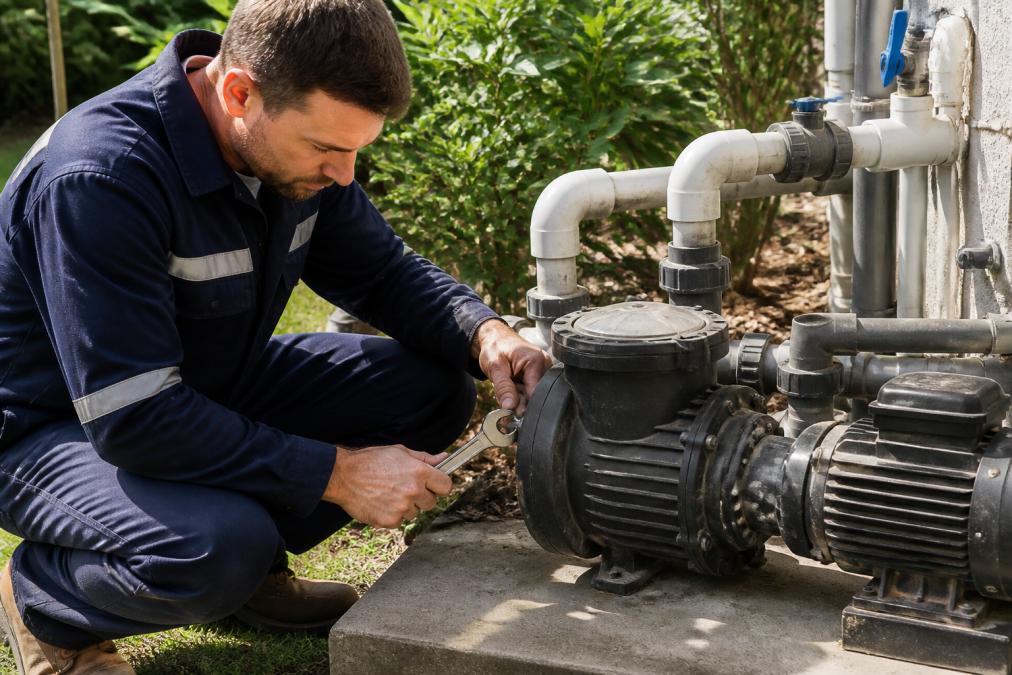
Professional installation costs more upfront but prevents costly mistakes. A technician ensures the pump is properly primed, pressure settings are correct, pipes are correctly sized and supported, and electrical connections meet safety standards.
DIY installation works for simple systems with minimal height difference and short pipe runs. For anything more complex, deep bores, long distances, multiple zones, or high-pressure requirements, professional installation is worth the investment.
The longevity equation is simple: proper sizing plus professional installation plus preventive maintenance equals a pump that lasts 10-15 years. Skip any of those steps, and you’re looking at replacement within 3-5 years.
Choosing an irrigation pump alternative to Pro Pumpz means understanding your water source, calculating your actual flow and pressure requirements, and selecting a pump engineered for those conditions. Grundfos JP Series delivers consistent pressure for most residential applications. Davey SJ Silver offers corrosion resistance in harsh environments. DAB Esybox provides energy efficiency for large properties. Onga Hi-Flo handles high-volume transfer. Franklin Electric submersibles excel in deep bores. Reefe EJP300E bridges residential and agricultural demands.
The real advantage of working with WaterPro’s is access to expertise. Our team has installed hundreds of systems across Melbourne since 1990, diagnosing water source conditions, calculating system requirements, and recommending the pump that actually solves your problem. We offer free garden irrigation design, qualified installation, and ongoing support. Book Now for a site assessment and custom recommendation tailored to your property’s unique needs.
Frequently Asked Questions
What should I look for when choosing an irrigation pump alternative?
Focus on three factors: your water source (tank, bore, dam, or mains), the flow rate you need (litres per minute), and the pressure head required. Submersible pumps suit bores and deep tanks; surface pumps work for shallow tanks and dams with suction lift under 9 metres. Match the pump's maximum flow and head to your irrigation system's demands. Check for thermal overload protection and corrosion-resistant materials like stainless steel for longevity.
How do I calculate the right flow rate for my irrigation system?
Count the number of sprinklers or drip lines and their individual flow rates (usually marked on the product). Add these together to find your total litres per minute needed. For drip irrigation, typical flow is 30-60 L/min; for sprinkler systems, 100-200 L/min is common. Also calculate pressure head: multiply the vertical distance from water source to highest outlet by 0.01 to get the head in metres. Your pump must deliver both the flow and head your system requires.
What's the difference between submersible and surface irrigation pumps?
Submersible pumps sit inside the water source (bore, tank, or dam) and push water upward; they handle sandy or dirty water well and work at depths beyond surface pump reach. Surface pumps sit above ground and pull water via suction lift (maximum 9 metres); they're easier to maintain and quieter. Choose submersible for deep bores or large dams; use surface pumps for shallow tanks, rainwater systems, or where maintenance access matters.
How often should an irrigation pump be serviced?
Preventive maintenance extends operational lifespan significantly. Check inlet filtration monthly to prevent debris entering the impeller. Inspect discharge pressure and flow consistency every three months. Have thermal overload protection tested annually. For heavy use (daily irrigation), arrange professional servicing every 12 months. For seasonal use, service before and after the main irrigation period. Dry run protection should always be enabled to prevent motor damage.
Can I use any pump for both water transfer and irrigation?
Most centrifugal pumps handle both, but suitability depends on the application. Transfer pumps typically deliver high flow at lower pressure; irrigation pumps often provide moderate flow with consistent pressure for drip systems. Jet pumps are excellent for pressure boosting and work well for both. Check the pump's flow rate and maximum head specifications against your specific needs. Some pumps, like the Onga Hi-Flo, are versatile for both applications; others are optimised for one.
This article was written using GrandRanker