

Table of Contents
- Why Water Pump Maintenance Service Matters
- How Often Should Water Pumps Be Serviced
- Signs of Water Pump Failure to Watch For
- Preventative Pump Maintenance Checklist
- Understanding Water Pump Repair Cost Factors
- Types of Pumps and Their Service Needs
- Emergency Pump Repair Services and On-Site Diagnostics
- DIY Troubleshooting vs Professional Service
Last Updated: August 15, 2026
Why Water Pump Maintenance Service Matters
A water pump that fails without warning can leave you without water pressure for days. Regular maintenance prevents this by catching small problems before they become expensive ones. A seal that’s starting to wear, a bearing running hot, or impeller damage are straightforward to fix during scheduled service. Left alone, they cascade into system breakdown, motor failure, and replacement costs that dwarf preventative care.
Most pump failures are predictable. They announce themselves through noise, reduced pressure, or subtle performance changes. A proper maintenance program teaches you to recognise these signals and act before the pump fails completely.
How Often Should Water Pumps Be Serviced
Water pumps should be serviced annually as a baseline for residential systems. However, frequency depends on several factors:
- Usage intensity. A pump running eight hours daily needs more frequent attention than one running two hours daily. High-use systems benefit from twice-yearly service.
- Water quality. Hard water, sediment-laden bores, or rainwater systems with poor filtration accelerate wear on seals and impellers. These systems often need service every six months.
- Pump type. Submersible pumps in harsh environments need more frequent checks than pressure tank systems in clean household applications.
- Age of the system. Older pumps, particularly those over ten years old, benefit from service every six months to catch deterioration early.
Most manufacturers recommend annual service as a minimum. If your system is under heavy use, has poor water quality, or is aging, schedule service twice yearly. Australian Standards for water supply systems provide guidance on maintenance intervals for different pump applications.
Signs of Water Pump Failure to Watch For
Common Indicators of Pump Trouble
A pump sends clear warning signals weeks or months before it stops completely. Learning to recognise these signs means you catch problems during routine service, not emergency breakdown.
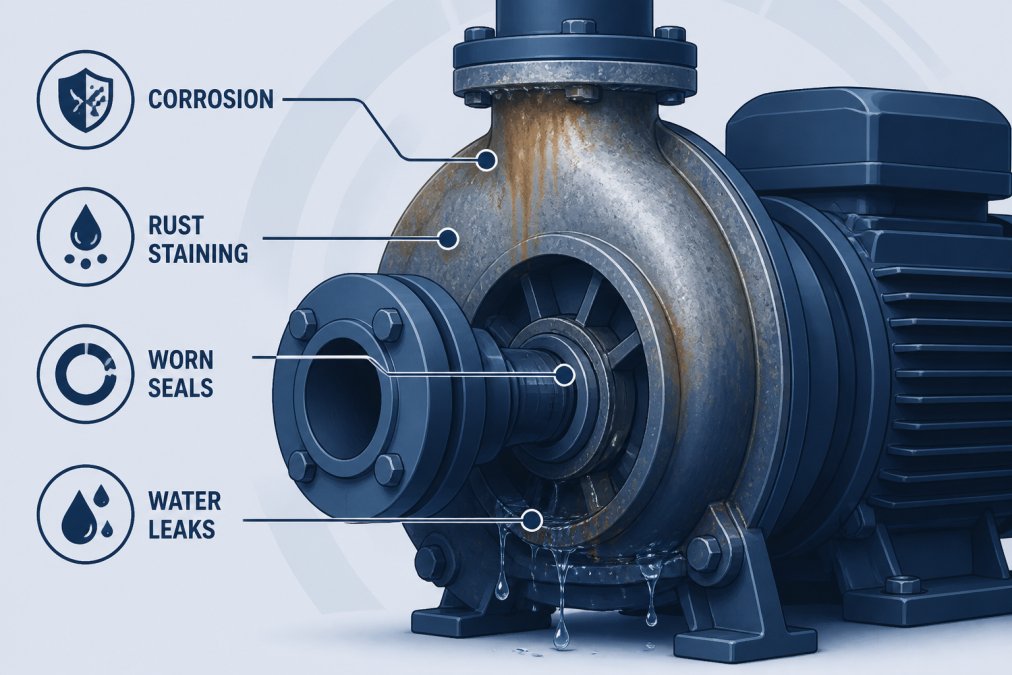
Reduced water pressure is the most common early warning. If your taps deliver less flow than before, your pump is struggling. This often points to impeller damage, cavitation (where air enters the system and creates bubbles), or a failing mechanical seal allowing internal leakage.
Unusual noise is another reliable indicator. A healthy pump runs quietly. A grinding sound suggests bearing wear. A high-pitched whine points to cavitation. A rhythmic clunking often signals impeller contact with the pump casing. These sounds appear weeks before complete failure.
Leaks around the pump housing or at connection points indicate seal failure. A small drip today becomes a steady stream in days. Seals are replaceable during routine service; ignoring them leads to motor damage.
Higher-than-normal electricity consumption is subtle but significant. If your power bills climb without explanation, your pump may be working harder to deliver the same flow, a sign of internal wear.
Vibration during operation suggests misalignment, bearing wear, or cavitation. A pump that vibrates noticeably is under stress.
When to Call a Professional
Call a professional immediately if you notice any visible leak from the pump or motor, grinding or whining sounds, complete loss of pressure, tripped circuit breaker when the pump runs, or discoloured or muddy water. These symptoms worsen rapidly and require professional diagnostics to identify whether repair or replacement is more cost-effective.
Preventative Pump Maintenance Checklist
Monthly Tasks
Spend ten minutes each month checking your system:
- Check water pressure. Note the reading on your pressure gauge. A sudden drop signals trouble.
- Listen for unusual sounds. Run the pump and listen carefully. Grinding, whining, or clunking is abnormal.
- Inspect visible connections. Look for wet spots, drips, or corrosion around pipe joints and the pump housing.
- Check the motor. Feel the motor casing carefully. It should be warm, not hot. Excessive heat suggests the motor is working too hard.
Annual Professional Service
Schedule professional water pump maintenance service once yearly. A qualified technician performs pressure testing, mechanical seal inspection, impeller condition checks, motor bearing assessment, alignment verification, and system efficiency audits. WaterPro’s technicians perform this full scope during annual service, catching problems your monthly checks will miss.
Understanding Water Pump Repair Cost Factors
What Affects Your Service Bill
Service pricing depends on several variables:
Pump type is the primary cost driver. A centrifugal pump seal replacement is straightforward and inexpensive. A submersible pump impeller replacement requires extraction, disassembly, and reassembly, significantly more labour.
Extent of damage determines whether repair is viable. A worn seal is a quick fix. Cavitation damage to the impeller or motor winding failure may make replacement more economical, particularly for older pumps.
Spare parts availability affects timeline and cost. Common pumps like Onga and Davey models have readily available seals and impeller kits. Older or specialist models may require longer lead times.
On-site versus workshop repair changes the bill. On-site diagnostics and simple repairs cost less than extracting the pump and transporting it to a workshop.
System complexity matters. A simple domestic pressure pump is easier to service than an irrigation system with multiple pumps and regulators.
Emergency versus scheduled service carries a premium. A 24/7 breakdown call costs more than a routine appointment. Preventative maintenance lets you schedule service at standard rates.
Contact WaterPro’s for a quote. Describe your pump type, symptoms, and system setup for a realistic estimate before work begins.
Types of Pumps and Their Service Needs
Centrifugal Pumps
Centrifugal pumps use a spinning impeller to move water outward by centrifugal force. They’re common in household pressure systems and irrigation applications because they’re reliable and efficient.
These pumps are straightforward to service. The impeller, bearings, and mechanical seal are accessible and replaceable. Common issues include cavitation, reduced flow due to impeller wear, and seal leaks. These are detectable during routine inspection and fixable before secondary damage occurs.
Submersible Pumps
Submersible pumps sit underwater in bores, tanks, or wells. They’re sealed units designed to operate submerged, making them ideal for deep water extraction and rainwater tank systems.
Service is more involved because the entire unit must be extracted to inspect internal components. However, submersible pumps are durable and often run for years between services if water quality is good. Common failures include seal degradation, bearing wear, and impeller damage from sediment. A submersible pump in a bore with high sediment content needs more frequent service, sometimes every six months.
Pressure Tank Systems
Pressure tanks store pressurised water and release it on demand, reducing how often the pump runs. These systems have multiple components: the pump, tank, pressure switch, check valves, and relief valves. Service involves checking all components. The tank may develop internal corrosion or lose its air charge. The pressure switch may fail to trigger at the right threshold.
Proper maintenance of a pressure tank system extends its life significantly through regular pressure checks, air charge verification, and relief valve testing.
Emergency Pump Repair Services and On-Site Diagnostics
24/7 Breakdown Support
When your pump fails, professional emergency services respond quickly and diagnose the problem on-site. A technician arrives with diagnostic equipment and spare parts. Many problems are fixed during the first visit, restoring your water supply the same day. Emergency call-outs cost more than scheduled service because they happen outside standard hours, but they’re essential when your system fails unexpectedly.
Fault Finding and System Diagnostics
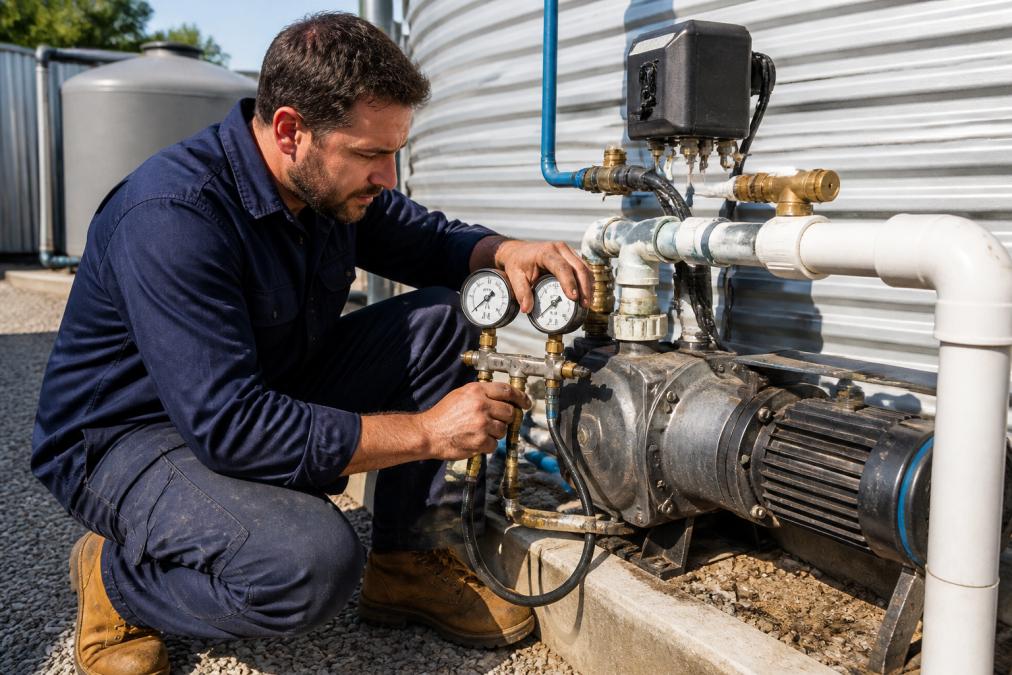
Professional technicians use pressure gauges, flow meters, vibration analysers, and electrical testing equipment to identify problems invisible to the naked eye.
Pressure testing reveals leaks in seals and joints. Flow rate measurement identifies impeller damage or system blockages. Vibration analysis detects bearing wear and misalignment. Electrical testing checks motor windings, capacitors, and control circuits.
These diagnostics cost far less than replacing a pump that might be repairable and identify exactly what options you have: repair, refurbishment, or replacement.
DIY Troubleshooting vs Professional Service
What You Can Check Yourself
Monthly monitoring catches problems early:
- Pressure gauge reading. Install a simple pressure gauge and check it monthly. Normal household pressure is 40-60 PSI; below 30 PSI signals trouble.
- Visual inspection. Look for leaks, corrosion, or loose connections. Water where it shouldn’t be is worth investigating.
- Sound assessment. Run the pump and listen. Grinding, whining, or clunking is abnormal.
- Water quality. Discoloured, muddy, or sediment-laden water indicates a system problem.
- Power consumption. Compare electricity bills month to month. Climbing bills suggest your pump is working harder.
These checks take minutes and cost nothing. If any check shows something unusual, schedule professional service.
When Professional Expertise Is Essential
Any leak from the pump or motor. A small drip becomes a large leak in days. Ignoring a leak leads to motor damage and expensive replacement.
Grinding or whining sounds. These indicate bearing wear or cavitation, both of which worsen rapidly.
Complete pressure loss. Something catastrophic has happened requiring professional assessment.
Electrical issues. If the pump won’t start, trips the circuit breaker, or draws excessive current, the motor has a problem requiring qualified expertise.
System efficiency concerns. A professional audit identifies whether the issue is a failing pump, blockage, or system design problem and recommends the best solution.
WaterPro’s provides this expertise. Our technicians have over three decades of experience diagnosing and fixing pump problems. We arrive with diagnostic equipment, spare parts, and knowledge to fix most issues on-site. For problems requiring workshop repair or replacement, we explain your options clearly and help you choose the most cost-effective path. Australian Water Association guidance on pump system maintenance supports the importance of regular servicing. Book a service appointment today and protect your water supply investment.
Frequently Asked Questions
How often should water pumps be serviced?
Most residential water pumps benefit from professional servicing at least once annually, though usage patterns vary. High-demand systems, commercial installations, and older pumps may need twice-yearly checks. Regular servicing catches wear on mechanical seals, impellers, and bearings before they fail. Your technician can recommend a schedule based on your system's age, type, and how heavily you use it.
What are the main signs of water pump failure?
Watch for reduced water pressure, strange noises like grinding or squealing, visible leaks around seals, discoloured water, or the pump failing to start. Vibration, cavitation (sputtering sounds), and motor overheating are also warning signs. If you notice any of these, arrange a professional inspection promptly, early diagnosis often prevents costly emergency repairs and system damage.
What factors affect water pump repair cost?
Repair costs depend on the pump type, extent of damage, parts availability, and whether work is on-site or workshop-based. Emergency call-outs typically cost more than scheduled service. Mechanical seal replacement, impeller repairs, and motor rewinding each carry different price points. Get a quote from your service provider, they'll assess your specific situation and explain what's involved before starting work.
Can I perform basic water pump maintenance myself?
You can handle simple checks: listen for unusual sounds, look for visible leaks, monitor water pressure, and keep the pump area clear of debris. However, internal work like seal replacement, bearing service, and pressure testing requires professional tools and expertise. Attempting complex repairs risks damaging the pump or creating safety hazards. Annual professional maintenance protects your warranty and system reliability.
What's included in a standard water pump maintenance service?
Professional maintenance typically includes visual inspection, pressure testing, flow rate checks, mechanical seal examination, bearing lubrication, and system diagnostics. Technicians may clean strainers, check control panels, and test pressure switches. They'll identify wear patterns and recommend preventative repairs before breakdown occurs. The service keeps your pump operating efficiently and extends its working life significantly.
What should I include in a preventative pump maintenance checklist?
Monthly: check water pressure, listen for noise changes, inspect for leaks, ensure the pump area is clean and accessible. Quarterly: test pressure switches and check motor performance. Annually: schedule professional service for seal inspection, bearing checks, and system diagnostics. Keep records of all service dates and work completed. This proactive approach prevents emergency breakdowns and helps your pump last longer.
This article was written using GrandRanker