
Table of Contents
- Landscape Lighting Melbourne: What Sets Services Apart
- How Outdoor Lighting Design Melbourne Cost Varies by Provider
- Best Landscape Lighting Installers Melbourne: What to Compare
- LED Technology and Energy Efficiency in Garden Lighting
- Landscape Lighting Maintenance Tips for Long-Term Performance
- Safety, Security, and Ambient Lighting: Design Principles That Work
- DIY vs Professional Installation: What Makes the Difference
- Conclusion
Last Updated: August 10, 2026
Landscape Lighting Melbourne: What Sets Services Apart
When you’re comparing landscape lighting Melbourne options, you’re not just choosing between price points, you’re deciding who understands your property’s unique layout, climate challenges, and aesthetic vision. The difference between a competent installation and an exceptional one often comes down to design expertise, product quality, and the technician’s ability to anticipate problems before they happen.
At WaterPro’s, we’ve spent over three decades installing and maintaining garden lighting systems across Melbourne’s diverse suburbs. What we’ve learned is that landscape lighting Melbourne requires more than plugging in fixtures. It demands a strategic approach to layering light, understanding voltage requirements, and selecting products that withstand Melbourne’s unpredictable weather patterns.
This guide breaks down what separates landscape lighting installers from the rest, and shows you exactly what to evaluate when you’re getting quotes.
The most common mistake homeowners make is treating landscape lighting as an afterthought. Plan it during your garden design phase, not after landscaping is complete. Moving cables and repositioning fixtures once plants are established costs significantly more.
How Outdoor Lighting Design Melbourne Cost Varies by Provider
The cost of outdoor lighting design Melbourne varies dramatically depending on the scope of work, product selection, and whether you’re paying for design consultation alone or design plus installation.
Most providers structure pricing around three variables: the number of fixtures, the complexity of the layout, and the materials chosen. A simple pathway lighting system for a modest suburban block costs less than a comprehensive garden design that includes accent lighting, uplighting for trees, and ambient lighting for entertaining areas.
WaterPro’s offers a free garden lighting design service, a significant advantage when you’re evaluating options. This means you can get a detailed plan and understand the scope before committing financially. Other providers may charge consultation fees upfront, which can range from modest amounts to several hundred dollars depending on the designer’s experience.
The real cost difference emerges when comparing product quality. Low-voltage LED garden lights vary widely in durability and light output. Budget fixtures may fail within two to three years in Melbourne’s climate, especially if they’re not properly sealed against moisture. Premium products cost more initially but deliver better colour rendering, longer lifespan, and more reliable performance.
Installation complexity also drives cost. A straightforward installation on flat, accessible ground costs less than work requiring cable routing through established gardens, across hardscaping, or in tight spaces. Professional installers factor in labour time, cable requirements, and whether existing infrastructure (like irrigation systems) needs to be worked around.
Avoid providers who quote a fixed price without a site visit. Landscape lighting costs depend entirely on your specific property, and fixed quotes often hide surprises during installation.
Best Landscape Lighting Installers Melbourne: What to Compare
When evaluating landscape lighting installers, focus on three core areas: design expertise and consultation, product quality and LED technology, and warranty plus ongoing support.
Design Expertise and Consultation
The strongest landscape lighting installers treat design as the foundation of the entire project. A good designer understands how light interacts with your garden’s layout, existing plants, architectural features, and how you actually use your outdoor spaces.
Ask potential installers how they approach the design process. Do they visit your property multiple times, once during daylight and once at dusk to understand shadows and existing light sources? Do they create a detailed plan showing fixture placement, light spread, and colour temperature? Do they discuss how the lighting will evolve as plants grow?
WaterPro’s includes a comprehensive design consultation in their service. This involves understanding your property’s unique characteristics, recommending fixture types suited to your climate zone, and creating a plan that balances aesthetics with functionality. The difference between a designer who simply places fixtures and one who thinks strategically about layering light becomes obvious once installation is complete.
Also consider whether the installer offers flexibility in design refinement. Good designers expect to adjust plans based on your feedback, moving fixtures, changing light colours, or adjusting intensity based on how the space feels.
Product Quality and LED Technology
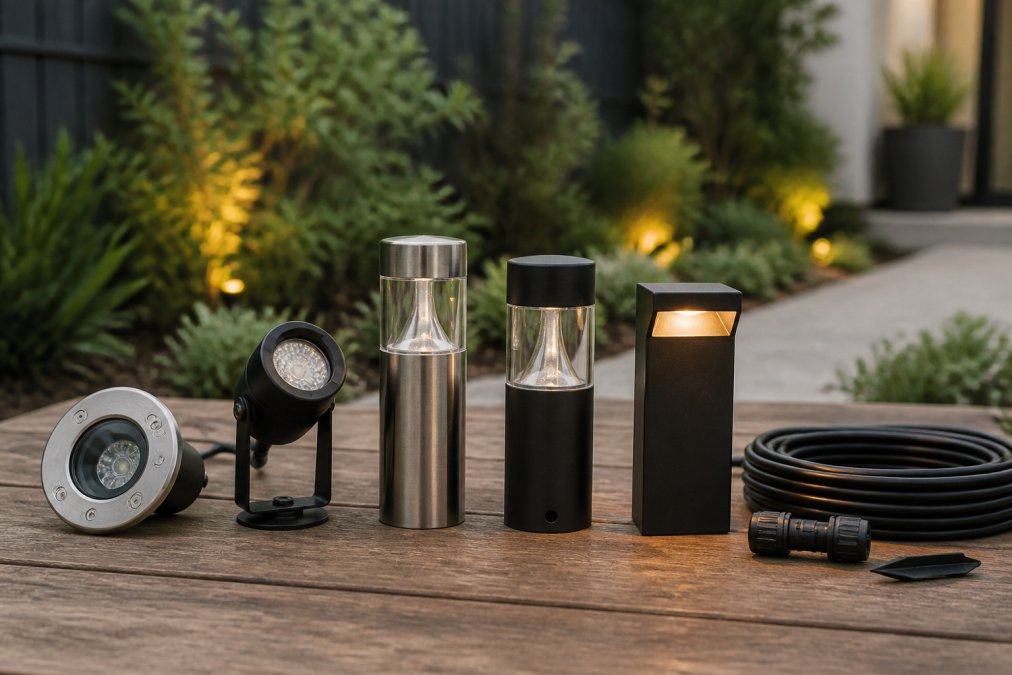
Not all LED garden lights perform equally in Melbourne’s climate. Landscape lighting installers specify products chosen for reliability, not just cost.
Look for fixtures with an IP rating of at least IP65, which means they’re protected against water jets and dust. In Melbourne, where humidity and occasional heavy rain are common, this protection matters. Fixtures rated IP54 or lower will eventually fail when moisture penetrates the housing.
LED colour temperature is another critical specification. Warm white (2700K) creates a relaxing atmosphere for entertaining areas. Cool white (4000K) works better for task lighting like pathways. The best installers explain these differences and recommend colour temperatures based on each area’s purpose.
Voltage also affects performance and safety. Low-voltage systems (12V) are safer for DIY installation and reduce shock risk, but they require thicker cables over longer distances to prevent voltage drop. Mains voltage (240V) systems deliver more power but require professional installation and careful safety considerations.
WaterPro’s sources products from established suppliers and acts as an Onga Master Dealer, ensuring access to quality components and genuine replacement parts. This partnership approach means you’re not stuck with orphaned fixtures if something fails years later.
Warranty and Ongoing Support
Warranty terms reveal how confident a provider is in their work. Standard warranties typically cover defects in materials and workmanship for one to two years, but the best installers offer longer coverage or extended service agreements.
More importantly, ask about ongoing support. What happens when a fixture fails in year three? Can the installer source a replacement, or are you left searching for compatible products? Do they offer maintenance services to keep your system performing optimally?
WaterPro’s provides maintenance services for landscape lighting systems, which is valuable for long-term performance. Regular maintenance catches issues early, corroded connections, failing LEDs, or cable damage, before they become larger problems.
LED Technology and Energy Efficiency in Garden Lighting
Modern LED technology has transformed garden lighting from an energy-heavy luxury into an efficient, sustainable choice. Understanding the basics helps you make better decisions when comparing landscape lighting Melbourne options.
LEDs consume roughly 75% less energy than traditional halogen or incandescent garden lights. A typical low-voltage LED garden spike light draws around 3-5 watts, compared to 20+ watts for older halogen equivalents. Over a season of evening use, this difference compounds significantly.
The efficiency advantage extends beyond power consumption. LEDs generate minimal heat, which means they’re safer to touch and don’t stress surrounding plants. They also last considerably longer, most quality LED garden lights deliver 25,000 to 50,000 hours of operation, equivalent to 10-20 years of typical use.
Colour rendering index (CRI) is a specification worth understanding. Higher CRI values (90+) mean colours in your garden appear more natural and vibrant under the light. Lower CRI values (70-80) can make plants and hardscaping look dull or washed out. Premium LED fixtures prioritise higher CRI.
The environmental benefit is substantial. A comprehensive garden lighting system using efficient LEDs might consume 200-400 watts total when fully illuminated. Compare that to an equivalent halogen system drawing 1,500+ watts, and the sustainability advantage becomes clear. For environmentally conscious homeowners, this efficiency is a genuine benefit beyond just lower electricity bills.
LED technology has matured to the point where efficiency and performance are no longer trade-offs. Modern LED garden lights deliver better light quality, longer lifespan, and dramatically lower energy consumption than alternatives.
Landscape Lighting Maintenance Tips for Long-Term Performance
Proper maintenance extends the life of your landscape lighting system and prevents common failures. Most issues are preventable with straightforward care.
Inspect connections annually. Low-voltage connectors exposed to moisture can corrode, causing flickering or complete failure. Check all connection points, where cables join fixtures, where transformers connect to the mains, and where buried cables emerge from the ground. Clean any corrosion with a soft brush and consider applying a water-resistant coating to exposed connectors.
Clear debris from fixtures. Leaves, dirt, and plant material accumulate on light covers, reducing output and trapping moisture. A quarterly clean with a soft cloth and mild soap keeps fixtures performing at full brightness.
Check cable routing. Garden work, digging, planting, or landscaping, can accidentally damage buried cables. Walk your garden periodically and note where cables are buried. Mark these areas to avoid accidental damage during maintenance work.
Test the transformer regularly. The transformer is the system’s most critical component. If lights begin flickering or dimming unevenly, the transformer may be failing. A qualified technician can test it and recommend replacement if necessary.
Monitor for water ingress. If a fixture stops working suddenly, water ingress is often the cause. Fixtures with compromised seals allow moisture inside, shorting the electronics. Replacement is usually the only solution, which is why IP rating matters during initial selection.
Trim vegetation around fixtures. Overgrown plants can block light, create shadows, and trap moisture around fixtures. Annual trimming keeps lighting effective and reduces moisture-related failures.
WaterPro’s offers maintenance services for landscape lighting systems, which can catch issues early and keep your installation performing optimally. Regular professional maintenance is worthwhile for comprehensive systems, especially if you want to avoid unexpected failures during peak entertaining season.
Safety, Security, and Ambient Lighting: Design Principles That Work
Landscape lighting Melbourne serves three distinct purposes: safety, security, and ambience. The best designs balance all three without creating harsh, unwelcoming spaces.
Safety lighting illuminates pathways, steps, and potential hazards. This lighting is functional, it needs to be bright enough to see where you’re walking without creating glare. Path lighting typically uses warm white LEDs (2700K) at low intensity, positioned to cast light downward rather than creating bright spots that reduce visibility through contrast.
Security lighting deters unwanted activity by illuminating dark areas around property perimeters. Motion-activated lights are effective for security because they draw attention to movement. However, continuous low-level lighting around property boundaries is also valuable, it eliminates hiding spots and creates a sense of visibility.
Ambient lighting creates mood and makes outdoor spaces inviting for entertaining. This includes uplighting on trees, accent lighting on architectural features, and softer lighting in seating areas. Ambient lighting is where design creativity shines, it transforms a functional garden into an outdoor room.
The key principle is layering. A well-designed landscape lighting Melbourne system uses multiple fixture types at different intensities. Bright task lighting illuminates functional areas. Softer accent lighting adds visual interest. Motion-activated security lights provide safety without constant illumination.
Colour temperature affects how welcoming a space feels. Warm white (2700K) lighting creates a relaxed, intimate atmosphere. Cool white (4000K) feels more clinical and is better suited to security or task applications. The best designs use warm white for entertaining areas and cooler tones for pathways and security zones.
DIY vs Professional Installation: What Makes the Difference
Installing landscape lighting yourself is technically possible, low-voltage systems are safer than mains-voltage work and don’t require a licensed electrician in most cases. However, the difference between DIY and professional installation becomes obvious once both systems are complete.
Design quality is the first difference. Professional designers understand how light behaves, how shadows change as plants grow, and how to create balanced, layered lighting. DIY installations often result in uneven light spread, fixtures pointed in wrong directions, or insufficient coverage in key areas. Fixing design mistakes after installation is expensive.
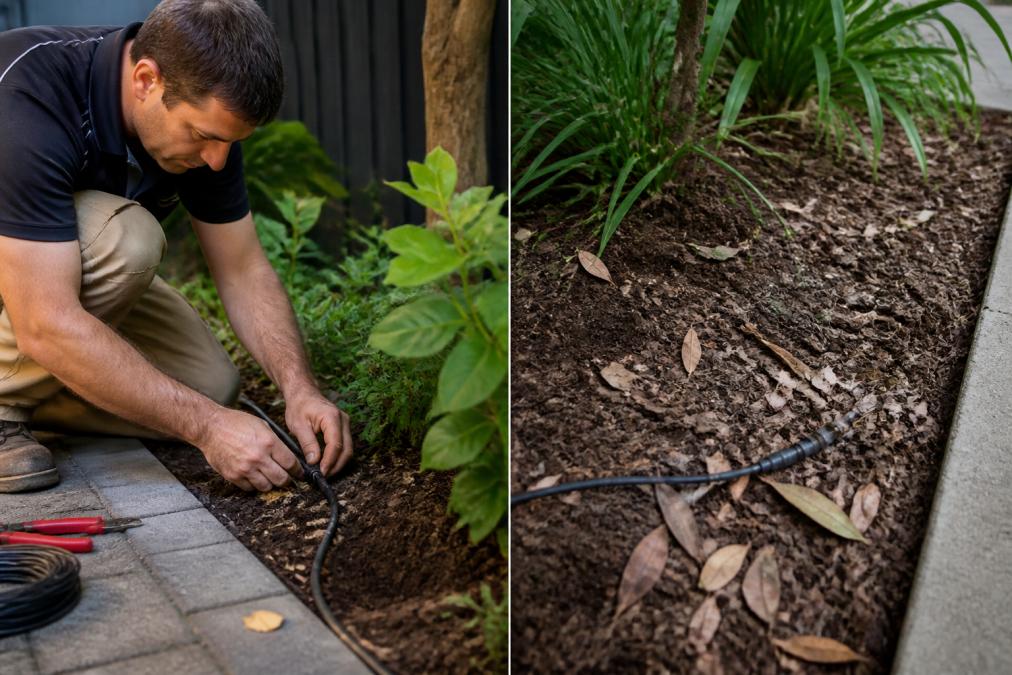
Cable routing and safety is where professionals add real value. Properly installed cables are protected from accidental damage, routed to avoid trip hazards, and positioned where they won’t be disturbed during future garden work. DIY installations frequently leave cables exposed or buried shallowly, creating maintenance headaches and safety risks.
Product selection differs significantly. Professionals have access to quality fixtures and know which products perform well in Melbourne’s climate. DIY installers often choose based on price or online reviews, sometimes ending up with products that fail prematurely in local conditions.
Troubleshooting and support is crucial. When something fails, a fixture stops working, lights flicker, or a transformer fails, professionals can diagnose the problem quickly. DIY troubleshooting often involves guesswork, trial and error, and potentially making problems worse.
Warranty and accountability matters. Professional installations come with warranties covering materials and workmanship. If something fails within the warranty period, the installer fixes it at no cost. DIY installations have no recourse if problems emerge.
For straightforward projects, adding a few pathway lights or upgrading existing fixtures, DIY is manageable. For comprehensive garden lighting design, especially in complex layouts or on properties with challenging terrain, professional installation delivers better results and longer-term reliability.
Choosing the right landscape lighting Melbourne provider comes down to evaluating design expertise, product quality, and long-term support. WaterPro’s brings over three decades of experience to every project, offering free design consultation, professional installation, and ongoing maintenance services that keep your garden lighting performing optimally. Book a consultation today and discover how expert landscape lighting design transforms your outdoor space into an inviting, functional, and beautifully illuminated extension of your home.
Frequently Asked Questions
Is professional landscape lighting installation worth the investment in Melbourne?
Professional landscape lighting installation delivers benefits that DIY approaches often miss. Qualified installers understand IP ratings, voltage requirements, and how to design lighting that complements your garden's architecture while avoiding light spill to neighbours. They also access quality products and warranties. The investment pays back through durability, proper functionality, and avoiding costly mistakes that require rework.
What should I look for when comparing landscape lighting installers in Melbourne?
Compare design expertise (do they offer free consultation?), product quality (LED efficiency ratings and durability), warranty terms, and experience with your property type. Ask about their approach to maintenance and whether they offer ongoing support. Check how they handle existing systems if you're upgrading, and verify they use proper safety standards for low-voltage installation.
How much does outdoor lighting design cost in Melbourne?
Design costs vary based on property size, complexity, and the provider. Many Melbourne installers offer free initial consultation and design. Full custom design services may be quoted separately or included in installation packages. Request quotes from multiple providers to understand what's included, some offer complimentary design, while others charge a fee applied toward installation.
What outdoor lighting trends are popular in Australian gardens for 2026?
Current trends include smart home integration with app-controlled lighting, warm LED colour temperatures that enhance garden ambience, sustainable low-voltage systems, and layered lighting strategies combining task, accent, and ambient fixtures. Homeowners increasingly favour energy-efficient LED upgrades of older systems and design approaches that prioritise both aesthetics and security without excessive brightness.
This article was written using GrandRanker