

Table of Contents
- Why Irrigation Systems Waste Water
- Drip Irrigation vs Spray Irrigation Efficiency
- Smart Irrigation Controllers Benefits for Water Conservation
- Irrigation System Maintenance Checklist to Reduce Waste
- Preventing Water Waste: Practical Steps for Your Garden
- Subsurface vs Surface Irrigation: Water Efficiency Comparison
- Conclusion
Last Updated: August 6, 2026
Why Irrigation Systems Waste Water
Most homeowners don’t realise how much water their irrigation systems lose through invisible leaks, evaporation, and poor scheduling. Understanding why this happens is the first step toward fixing it. Over three decades serving Melbourne properties, WaterPro’s has diagnosed countless systems wasting thousands of litres annually without their owners knowing.
Water waste happens quietly: a nozzle drifting slightly off target, soil drying between scheduled waterings, pressure set too high, or clogged emitters forcing water to find alternative paths. Each small inefficiency compounds. A system losing 20% of its water wastes roughly one day’s worth of irrigation every five days.
Common causes of water waste
Evaporation is the largest source of loss in spray irrigation. When water travels through air from sprinkler to soil, a portion disappears into the atmosphere. On hot, windy Melbourne summer days, this loss can exceed 30% of applied water.
Runoff occurs when soil is compacted or steeply sloped. Water can’t infiltrate quickly enough and flows downhill or pools on the surface, draining away unused. This is common on older properties where foot traffic has compressed topsoil.
Leaks are the third major category. A pinhole in a main line or loose connection might seem minor, but a single leak wastes 50 litres per day undetected. Most homeowners discover leaks only when water bills spike or wet patches appear.
Poor scheduling is equally destructive. Watering on a fixed timer regardless of rainfall or soil moisture means irrigating when soil is already wet. In Melbourne’s variable climate, summer settings massively overwater cooler months.
Pressure problems are less obvious but equally wasteful. Excessive pressure creates overspray that misses your garden. Low pressure produces weak spray patterns that don’t reach intended areas.
How leaks and poor maintenance compound the problem
A single leak doesn’t stay small. Water escaping from a damaged line undermines surrounding soil, enlarging the hole and increasing flow rate. What started as 5 litres per day becomes 15 litres per day within weeks.
Poor maintenance accelerates every problem. Nozzles accumulate mineral deposits. Emitters clog. Soil compacts further. Filters fill with sediment and restrict flow. Each unchecked issue creates conditions triggering additional waste. These problems remain invisible until severe, dead patches, high water bills, or visible pooling, meaning systems often waste water for months undetected.
Drip Irrigation vs Spray Irrigation Efficiency
Drip irrigation delivers water directly to soil at low pressure, losing far less to evaporation and runoff. Spray irrigation throws water into the air where it’s vulnerable to wind and heat loss.
Water loss through evaporation and runoff
Spray irrigation loses water at every stage. Water evaporates during flight and from leaf surfaces before reaching soil. On hot Melbourne summer days with moderate wind, evaporation losses commonly reach 20-30%. Add runoff on sloped or compacted soil, and total losses can exceed 40% of applied water.
Drip irrigation operates at ground level with minimal air exposure. Water moves through tubing directly to emitters at the soil surface. Evaporation loss is typically 5-10%, and runoff is nearly eliminated because water is delivered slowly enough for soil to absorb it. For properties with water restrictions or high water costs, this efficiency difference is substantial.
Most efficient properties use both: drip for planted areas, spray for turf.
Smart Irrigation Controllers Benefits for Water Conservation
A smart irrigation controller adjusts watering schedules automatically based on weather data, soil moisture, and plant needs. On a cool, rainy Melbourne week, a smart controller detects rainfall and skips scheduled watering. A conventional timer would still run, wasting water on already-saturated soil.
Many smart controllers integrate soil moisture sensors that measure water content in the root zone. When soil reaches target moisture, watering stops automatically, preventing both under- and over-watering whilst minimising waste.
Real-time sensor calibration is critical for accuracy. A sensor installed in poorly representative soil, or one that drifts over time, will trigger watering at wrong times. Proper placement in the most representative garden area and periodic recalibration ensure the controller responds to genuine soil conditions.
Irrigation System Maintenance Checklist to Reduce Waste
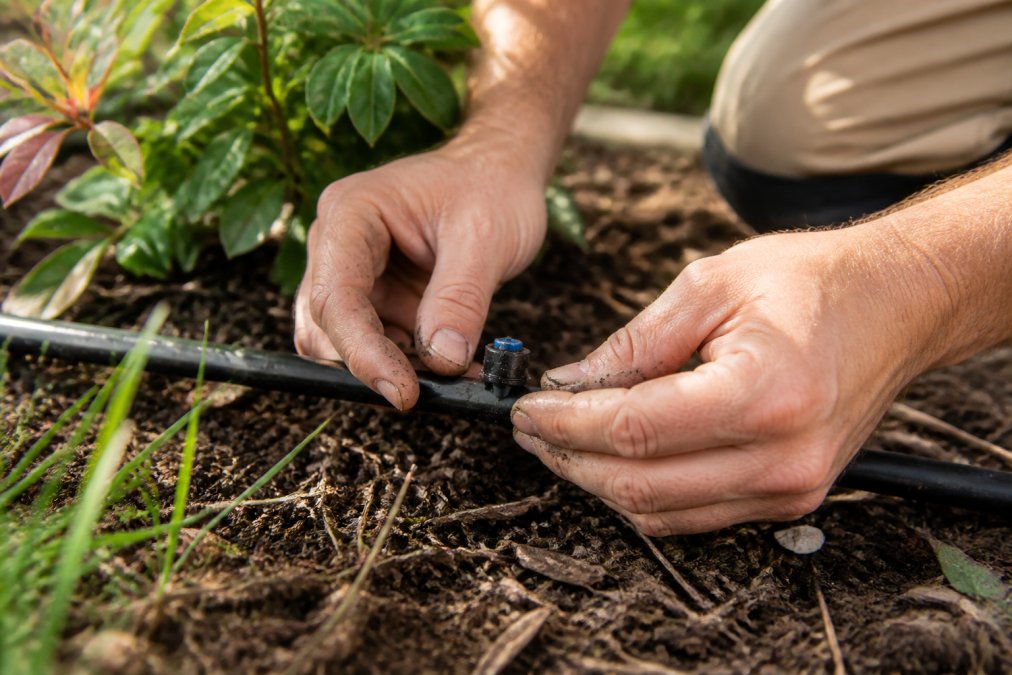
Regular maintenance catches small problems before they become large water losses. A systematic approach prevents multiple small failures from degrading system efficiency simultaneously.
(/blog/irrigation-system-maintenance-commercial-properties/) Checklist to Reduce Waste]
Monthly tasks:
- Visual inspection of all visible lines and connections for leaks or damage
- Check soil moisture in several locations to verify even water delivery
- Observe spray patterns from nozzles to ensure consistent coverage
- Clear debris from around emitters and sprinkler heads
Quarterly tasks:
- Test system pressure at multiple points using a pressure gauge
- Clean or replace filters if sediment accumulates
- Inspect and clean nozzles to remove mineral deposits
- Check for new leaks or damage
Annual tasks:
- Flush the entire system to clear accumulated sediment
- Inspect underground lines by digging test holes at regular intervals
- Replace cracked fittings or damaged tubing sections
- Recalibrate soil moisture sensors if your system uses them
- Adjust controller settings based on seasonal changes
DIY leak detection and pressure testing
Check your water meter before and after a two-hour period when no water is being used. If the reading changes, you have a leak. Isolate each irrigation zone by closing its valve and checking the meter again. When the meter stops changing, you’ve found the affected zone.
For above-ground lines, visual inspection often reveals leaks immediately through wet soil, pooling water, or visible cracks. For underground lines, look for unusually green patches or soft, spongy soil indicating water escaping below the surface.
Pressure testing requires a pressure gauge (available from hardware stores). Normal operating pressure for most residential systems is 200-300 kPa. Pressure significantly higher causes overspray and accelerates component wear; low pressure produces weak coverage.
Nozzle and emitter inspection
Remove nozzles and inspect them under running water. Mineral deposits appear as white or tan crusty buildup. Soak affected nozzles in equal parts white vinegar and water for 30 minutes, then flush thoroughly. Replace severely damaged nozzles.
Test drip emitters by running water through them individually. Water should emerge in a consistent pattern. If an emitter produces no water or weak trickle whilst others flow normally, it’s clogged and needs cleaning or replacement.
Preventing Water Waste: Practical Steps for Your Garden
Reducing water waste requires scheduling intelligence, soil monitoring, and pressure control working together to ensure water is applied only when needed, in the right amount, and the right way.
Scheduling based on evapotranspiration rates
Evapotranspiration (ET) is combined water loss from soil evaporation and plant transpiration. Melbourne’s ET rates are highest in summer (4-6 mm per day) and lowest in winter (0.5-1 mm per day).
Calculate how much water your garden needs to replace ET losses rather than watering on a fixed schedule. If your soil holds 25 mm of available water and ET is 5 mm per day, water every five days in summer. In winter, the same garden might need watering only once every two weeks.
Smart controllers calculate ET automatically using weather station data. For manual scheduling, check your local water authority’s seasonal ET estimates and adjust your controller’s run time and frequency accordingly.
Installing soil moisture sensors
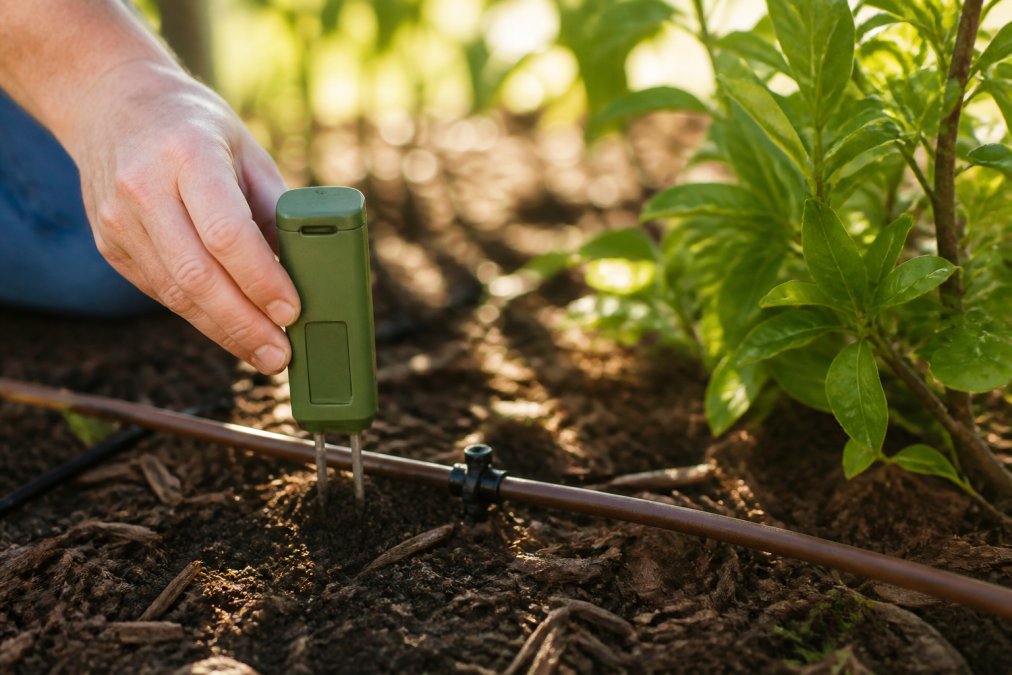
Soil moisture sensors measure water content in the root zone and trigger watering only when soil dries to a target level. This eliminates watering on days when recent rainfall has already saturated the soil.
Install sensors in the most representative garden area. If you have sloped terrain or mixed plantings with different water needs, install separate sensors for each zone. Calibrate sensors when first installed by watering thoroughly, then allowing complete drying, noting readings at both extremes.
Adjusting pressure regulation
Pressure regulators reduce main line pressure to a level appropriate for your nozzles and emitters. Most residential systems perform best at 200-280 kPa. Check your nozzle and emitter specifications and install a regulator if main line pressure exceeds the recommended range.
Sediment can clog regulators, reducing effectiveness. If pressure is unstable or drifts over time, remove and clean the regulator or replace its cartridge if necessary.
Subsurface vs Surface Irrigation: Water Efficiency Comparison
Subsurface irrigation delivers water below the soil surface, eliminating evaporation entirely and reducing runoff. Buried drip lines allow water to seep into soil along their length. Because water never travels through air, evaporation losses approach zero and runoff is eliminated.
For water-restricted areas or properties with high water costs, subsurface systems deliver maximum efficiency. The drawback is complexity and cost, installation requires excavation and maintenance becomes difficult because the system is underground.
Surface drip irrigation (lines visible on soil surface) offers a practical middle ground. It eliminates most evaporation loss compared to spray systems whilst remaining easy to inspect and maintain. Emitters can be repositioned to match changing garden layouts.
For most Melbourne properties, a combination approach works best: use subsurface or surface drip irrigation for garden beds and vegetable patches, and spray irrigation for lawns where coverage speed matters more than efficiency.
At WaterPro’s, we’ve spent over three decades helping Melbourne homeowners diagnose and fix water waste in their irrigation systems. Most waste isn’t dramatic, it’s the accumulation of small inefficiencies: slightly high pressure, slightly poor scheduling, slightly clogged emitters. Fixing these small issues delivers measurable results.
If you’ve noticed climbing water bills or patches of garden that seem perpetually dry despite regular watering, a professional system audit can identify exactly where water is being lost. Our qualified technicians perform pressure testing, leak detection, and sensor calibration to bring your system into proper balance. We also offer free garden irrigation design consultation to help you understand whether your current setup is appropriate for your property’s needs.
Book a consultation with WaterPro’s today to discover how much water your system might be wasting, and how to stop it.
Frequently Asked Questions
What are the most common causes of water waste in garden irrigation?
The main culprits are leaks in pipes and connections, clogged or damaged emitters, misaligned sprinkler nozzles that water pavement or neighbours' properties, and poor scheduling that ignores weather and soil conditions. Evaporation from spray systems on hot days and runoff from uneven terrain also waste significant water. Regular inspection catches these early.
How can I tell if my irrigation system is leaking?
Watch for wet patches in your garden that don't correspond to where you've watered, unusually high water bills, or pooling water near valve boxes. Turn the system off and check if water continues flowing. For subsurface leaks, dig around buried pipes. Many homeowners miss leaks because they assume uneven plant growth is normal, it's often a sign of water distribution problems.
Are drip irrigation systems more efficient than spray systems?
Yes. Drip and trickle irrigation deliver water directly to soil, losing far less to evaporation and runoff. Spray systems lose 20-50% of water to wind and surface evaporation, especially on hot days. Drip systems achieve 80-90% water efficiency. However, they require more frequent maintenance to prevent emitter clogging. The right choice depends on your garden layout and maintenance commitment.
How often should I audit my irrigation system for leaks?
Inspect your system at least twice per season, at the start of spring and again in summer when water use peaks. Check soil moisture sensors, pressure regulators, and visible pipes monthly during the growing season. After heavy rain or if you notice water waste, inspect immediately. Early detection prevents wasted water and expensive repairs.
This article was written using GrandRanker