

Table of Contents
- Why Irrigation Maintenance Is Vital for Your Garden
- Common Irrigation System Problems and How Maintenance Prevents Them
- How Often to Service Irrigation System for Peak Performance
- Water Conservation and Irrigation Efficiency Benefits
- Conducting an Irrigation System Efficiency Audit
- DIY Maintenance Tasks vs Professional Service: What You Need to Know
- Long-Term Cost Savings Through Preventative Maintenance
- Conclusion
Last Updated: August 24, 2026
Why Irrigation Maintenance Is Vital for Your Garden
Most homeowners treat irrigation systems like set-and-forget infrastructure. Turn on the controller in spring, adjust it once or twice during summer, then ignore it until something breaks. That approach costs money, sometimes a lot of it.
The truth is simpler: irrigation maintenance isn’t optional if you want your garden to thrive and your water bill to stay reasonable. A well-maintained system delivers water where it’s supposed to go, uses less of it, and lasts decades longer than one left to deteriorate. At WaterPro’s, we’ve spent over three decades watching systems fail because owners skipped basic preventative care. The ones that performed best? They got regular attention.
This guide covers what actually happens when you neglect irrigation maintenance, how often you should service your system, and where you can make the biggest difference yourself versus when to call a professional. Whether you’re protecting an established garden or managing a new installation, understanding these fundamentals will save you money and frustration.
Common Irrigation System Problems and How Maintenance Prevents Them
Most system failures fall into a handful of predictable categories. The good news is that routine irrigation maintenance catches all of them before they become expensive.
Leak detection and pipe integrity
Water escaping from your pipes is money and resources disappearing into the soil. Small leaks start invisibly, a pinhole in a connector, a hairline crack in PVC, a corroded fitting, and grow worse over time as pressure and ground movement stress the compromised section.
Detecting leaks early requires knowing what to look for. Soggy patches that don’t match your watering schedule, unexplained spikes in your water meter reading, or reduced pressure at certain zones all point to pipe damage. Some leaks are underground and harder to spot, which is why regular system audits matter. Walking your property after the system runs can reveal wet areas where they shouldn’t be.
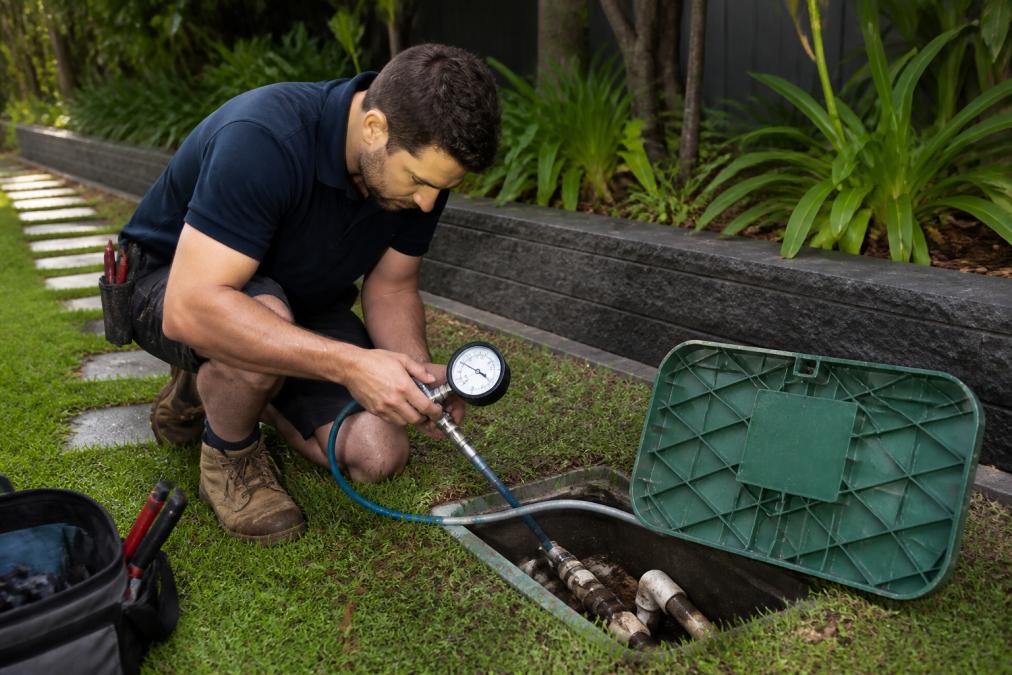
Repairing a small leak immediately costs a fraction of what you’ll pay when that section fails completely and floods your garden bed or undercuts your patio. Pipe integrity checks during routine irrigation maintenance sessions catch problems at the point where fixing them is straightforward.
Clogged emitters and nozzle replacement
Sediment, mineral buildup, and debris accumulate inside emitters and sprinkler heads over months of operation. When water quality is poor or your system hasn’t been flushed regularly, particles lodge in the nozzles and restrict flow. The result is uneven water distribution, some plants get drenched while others stay dry.
Clogged emitters are one of the easiest problems to prevent. Flushing your system at the start of each season and replacing worn nozzles keeps water flowing consistently. Nozzle replacement is straightforward enough for most homeowners, though the specific type and size matter. Getting the wrong replacement means water patterns change and your coverage gaps widen.
Regular inspection of sprinkler heads and drip emitters during irrigation maintenance routines catches clogs before they degrade coverage across your landscape. Cleaning or replacing nozzles takes an hour for a typical residential system and delivers immediate improvement in plant health.
System pressure and valve inspection issues
Irrigation systems operate within a specific pressure range. Too low, and water doesn’t reach the far ends of your zones. Too high, and you damage fittings, blow out seals, and waste water through mist and overspray.
Valves regulate that pressure and control which zones run when. Over time, valve seals wear, debris gets trapped inside, and connections corrode. A valve that’s failing doesn’t always stop working completely, it leaks slowly, cycles at the wrong time, or fails to fully close. You might not notice until your water bill climbs or certain zones stop responding to your controller.
Inspecting valves and checking system pressure during routine maintenance prevents these failures. A qualified technician uses a pressure gauge to verify your system sits within the correct range and tests each valve’s response. Catching a failing valve before it fails completely means replacing one component instead of dealing with water damage or system shutdown mid-season.
How Often to Service Irrigation System for Peak Performance
The frequency of irrigation maintenance depends on your system’s age, water quality, climate, and how intensively you use it. There’s no universal schedule, but there are proven patterns that work.
Spring startup and winterization schedules
Your system needs attention twice a year at minimum: once in spring when you restart after winter, and once in autumn before cold weather arrives.
Spring startup involves checking for winter damage, testing all zones to confirm they respond, inspecting for leaks that developed during dormancy, and flushing sediment that accumulated over months of non-use. This is when you catch problems before the growing season depends on reliable operation. Many homeowners find that a spring service call prevents failures that would otherwise occur in mid-summer when the system is working hardest.
Winterization in autumn protects your system from freeze damage. In regions with frost risk, water trapped in pipes expands as it freezes and cracks fittings and valves. Draining your system, blowing out lines with compressed air, and storing exposed components prevents costly damage. Even in milder climates, winterization protects seals and connections from months of inactivity.
Monthly and quarterly inspection routines
Between seasonal services, monthly visual checks catch problems early. Walk your property while the system runs. Look for dry patches, soggy areas, broken sprinkler heads, and obvious leaks. This takes 15 minutes and costs nothing but reveals issues before they compound.
Quarterly inspections go deeper. Check valve operation, measure pressure, inspect visible pipe sections, and test your controller’s programming. These routine checks keep your system operating at consistent efficiency and catch drift before it becomes a problem.
Water Conservation and Irrigation Efficiency Benefits
Well-maintained systems use significantly less water than neglected ones. When your irrigation maintenance program includes regular audits and adjustments, water waste drops because water goes where it’s intended instead of leaking, running off, or oversaturating soil.
Efficient water distribution means your plants get consistent hydration without excess. Soil moisture stays in the optimal range, wet enough for plant roots to absorb, but not so wet that roots rot or nutrients leach away. This balance improves plant health and reduces disease pressure from overwatering.
From an environmental perspective, reducing water waste matters. Irrigation accounts for a significant portion of residential water use in most regions (the EPA). Maintaining your system to minimise waste and runoff is both practical and responsible. Seasonal optimization, adjusting your controller’s runtime and frequency as temperatures and rainfall change, amplifies these benefits.
The financial benefit is immediate. A system that leaks 10% of its water costs more to run every month (usgs.gov). Fixing that leak through routine irrigation maintenance reduces your water bill and lowers your environmental footprint simultaneously.
Conducting an Irrigation System Efficiency Audit
An efficiency audit measures how well your system actually performs versus how well it should perform. This is where you discover whether your irrigation maintenance efforts are working or where adjustments are needed.
Measuring flow rates and distribution uniformity
Flow rate is the volume of water your system delivers per unit of time, typically measured in litres per minute. Knowing your system’s flow rate tells you whether it matches your water supply capacity and whether pressure is optimal. Too little flow means some zones don’t get enough water. Too much flow stresses fittings and causes waste through overspray.
Distribution uniformity measures whether water is applied evenly across your landscape. Ideally, every plant receives roughly the same amount of water. In practice, variations in terrain, nozzle wear, and pressure differences create inconsistency. An audit identifies which zones have poor uniformity so you can adjust nozzle types, spacing, or pressure to improve coverage.
Measuring flow rates and uniformity requires basic tools, a bucket, a stopwatch, and a pressure gauge, or a professional audit with specialised equipment. The investment in understanding your system’s actual performance guides all subsequent irrigation maintenance decisions.
Smart controller programming and water runoff reduction
Modern controllers allow precise scheduling and seasonal adjustments. Programming your controller to match your landscape’s actual water needs, accounting for plant type, soil conditions, rainfall, and temperature, eliminates guesswork and waste.
Smart controllers take this further, adjusting watering schedules based on weather data, soil moisture sensors, or both. These systems reduce water runoff by delivering water slowly enough for soil to absorb it rather than allowing excess to flow downhill. They also prevent watering during or immediately after rain, eliminating obvious waste.
Proper controller programming is one of the highest-ROI irrigation maintenance tasks. Reprogramming your controller costs nothing but time and immediately reduces water consumption and runoff.
DIY Maintenance Tasks vs Professional Service: What You Need to Know
Some irrigation maintenance tasks are straightforward enough for homeowners to handle. Others require specialised knowledge, tools, or access that most properties don’t have.
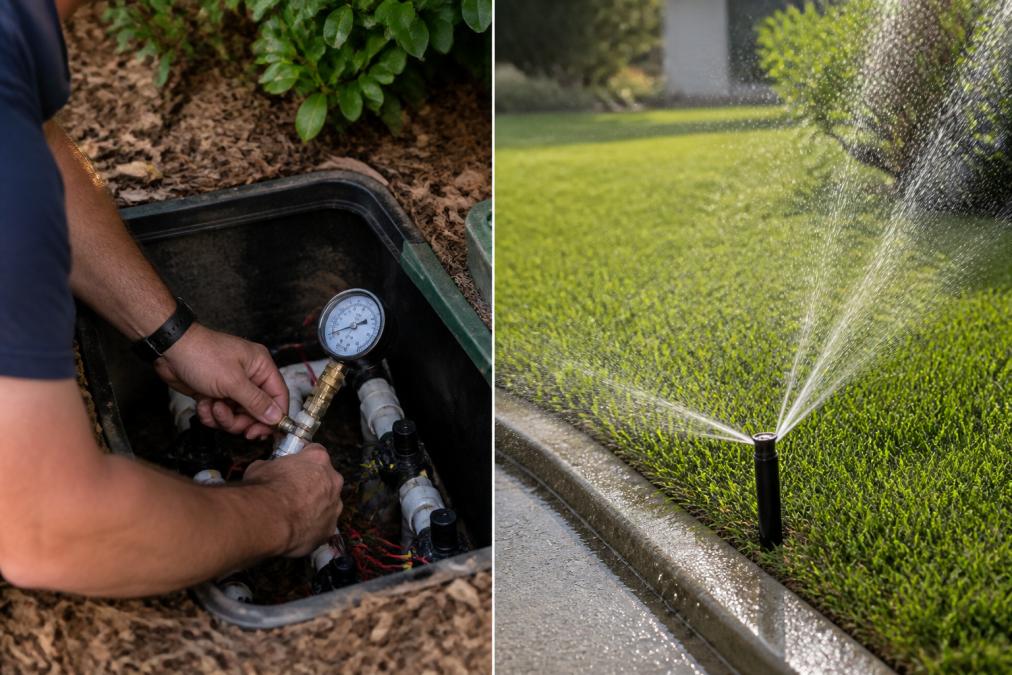
DIY tasks you can confidently manage include visual inspections, cleaning debris from sprinkler heads, replacing worn nozzles, and adjusting controller programming. These require only basic tools and take an hour or two per season. They’re also low-risk, mistakes are easily corrected.
Tasks best left to professionals include pressure testing, valve repair or replacement, major leak diagnosis in underground lines, winterization involving compressed air, and system redesign. These require specialised equipment, knowledge of local codes, and the skill to avoid creating new problems while fixing old ones. A plumber or electrician who makes a mistake might damage your property; an irrigation technician who makes a mistake might damage your system in ways that aren’t obvious until mid-season.
WaterPro’s technicians have spent decades diagnosing and fixing irrigation problems. We carry diagnostic tools that identify underground leaks, test valve function under load, and measure system performance against design specifications. For most homeowners, the cost of a professional inspection twice yearly is far less than the cost of system failures, water waste, or landscape damage from poor irrigation.
Long-Term Cost Savings Through Preventative Maintenance
The maths of preventative irrigation maintenance are straightforward. Regular service costs a modest amount per visit. System failures, water waste, and landscape damage cost far more.
A small leak that goes undetected for a season can waste thousands of litres of water. A valve that fails mid-summer forces you to either run your system on manual (labour-intensive and error-prone) or leave certain zones dry (plants suffer or die). A controller that’s never been optimised runs your system on generic settings that waste water and money.
Preventative maintenance spreads costs evenly across the year and catches problems while they’re cheap to fix. Reactive maintenance, waiting for something to break, concentrates costs into emergency repairs and often includes collateral damage (landscape damage, water waste, plant loss).
Over a decade, a system that receives regular irrigation maintenance costs less to own and operate than one that doesn’t. It also lasts longer. Irrigation components are built to last 15-20 years with proper care or 8-10 years with neglect (asabe.org). The difference is routine attention.
Maintaining your irrigation system is one of those tasks that feels optional until something breaks. By then, you’re managing a crisis instead of preventing one. Regular inspections, seasonal adjustments, and prompt repairs keep your system working reliably, your plants thriving, and your water bill reasonable. WaterPro’s has helped homeowners across the region avoid these problems by building irrigation maintenance into their seasonal routines. If your system hasn’t had professional attention in more than a year, or if you’re seeing signs of wear or inefficiency, get in touch. We’ll audit your system, identify what needs attention, and show you exactly where routine maintenance makes the biggest difference. Book a consultation with our qualified technicians and discover how proper care transforms your irrigation from a source of frustration into a reliable asset.
Frequently Asked Questions
What are the most common signs that an irrigation system needs maintenance?
Watch for uneven water distribution across your garden, dry patches alongside overwatered areas, reduced water pressure, visible leaks or wet spots near pipes and valves, and higher water bills than normal. If sprinkler heads are clogged or damaged, or if your controller isn't triggering schedules properly, these are clear signals that maintenance is overdue. Addressing these early prevents small problems from becoming costly system failures.
How often should an irrigation system be serviced?
Most systems benefit from professional servicing twice yearly: a spring startup check before peak growing season and an autumn winterization before cold weather. Between visits, monthly visual inspections for leaks, clogged emitters, and system pressure issues help catch problems early. The exact schedule depends on your system type, climate, and how heavily you use it, so a professional audit can recommend the right timing for your property.
Can poor irrigation maintenance lead to higher water bills?
Yes, significantly. Undetected leaks, clogged nozzles, and incorrect controller programming waste water and inflate your bills. Regular maintenance ensures proper flow rates, reduces water runoff, and optimises irrigation scheduling to match seasonal soil moisture needs. Over time, preventative maintenance typically pays for itself through lower water consumption and reduced emergency repair costs from system failures.
What's the difference between DIY maintenance and professional irrigation system servicing?
DIY tasks like visual inspections, clearing visible debris, and adjusting controller settings are manageable for homeowners. However, professional technicians have tools and expertise to detect hidden leaks, measure distribution uniformity, diagnose valve and pressure issues, and perform system audits that identify efficiency problems. A professional can also ensure your system meets regulatory compliance and optimise it for your specific landscape and water conservation goals.
This article was written using GrandRanker