

Table of Contents
- Layering Light for Depth and Ambiance
- Best Colour Temperature for Outdoor Lights
- Pathway Lighting Design Ideas That Enhance Safety
- Spotlighting Trees and Architectural Features
- Outdoor Lighting Installation Tips for DIY and Professional Setup
- Energy-Efficient LED and Solar Garden Lighting Options
- Deck, Patio, and Alfresco Dining Area Lighting
- Garden Lighting Design Ideas That Respect Your Neighbours
Last Updated: August 26, 2026
Layering Light for Depth and Ambiance
Layering different light sources at varying heights transforms a flat yard into something with genuine visual interest. Combine ambient lighting (overall illumination), task lighting (functional areas like pathways and dining), and accent lighting (highlighting specific features) to create dimension.
Start with ambient lighting as your foundation, soft uplighting on trees or diffused light across your patio. Add task lighting along pathways, near seating, and around outdoor living spaces. Finally, use accent lighting to highlight architectural features, specimen plants, water features, or textured walls. The interplay between these three creates depth and visual appeal.
Consider colour temperature when layering. Warm white lights (around 2700K) create intimacy for ambient and accent layers. Cooler tones (4000K or higher) suit task lighting where you need clarity. Spacing matters equally: lights placed too close create flat, uniform brightness. If uplighting trees, position lights 1.5 to 2 metres from the trunk and angle them to graze the canopy, creating shadow and dimension rather than washing everything in light.
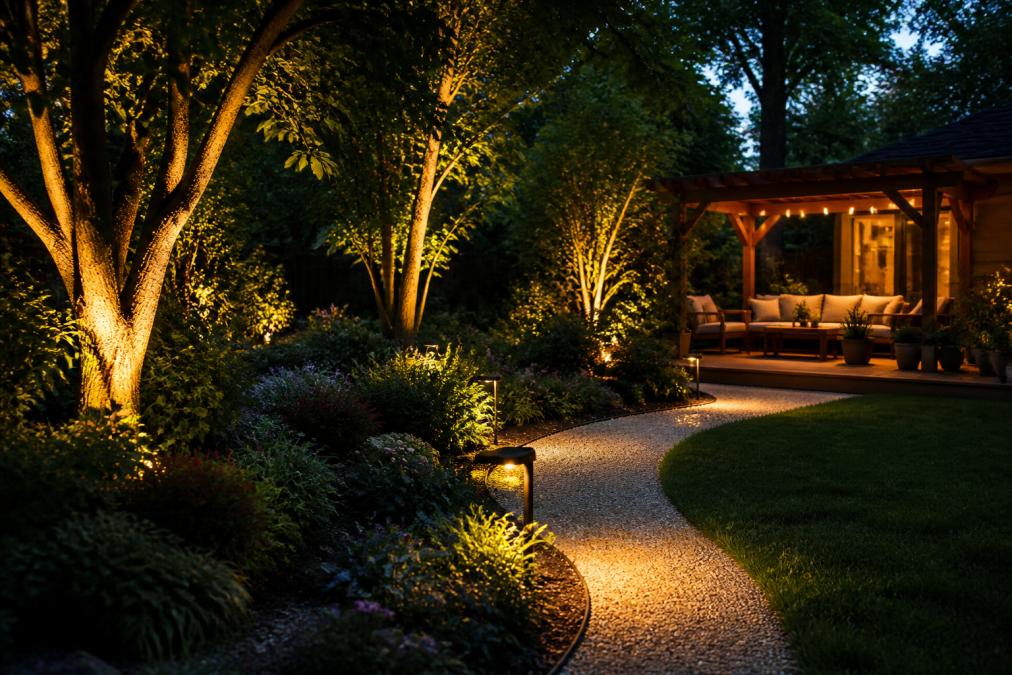
When layering lights, install your ambient layer first, then add task lighting, then accent lighting last. This prevents over-lighting and ensures each layer serves a purpose rather than competing for attention.
Best Colour Temperature for Outdoor Lights
Colour temperature, measured in Kelvin, fundamentally changes how your garden feels after dark. Warm white light at 2700K mimics candlelight and is perfect for entertaining areas where you want people to relax. Neutral white at 4000K offers balanced, natural-looking light ideal for task lighting like pathways and step lights. Cool white at 5500K or higher is clinical and rarely appropriate for residential gardens unless you need maximum security visibility.
Warm light at the same wattage feels dimmer than cool light, so you might need slightly higher lumens in warm fixtures to achieve the same visibility. Colour temperature also affects how plants look: warm light enhances greens and makes foliage appear lush, while cool light can make plants look washed out.
For most residential gardens, stick with 2700K for ambiance and entertaining areas, 4000K for pathways and functional zones. Avoid cool white unless you have a specific security or task-lighting need.
Pathway Lighting Design Ideas That Enhance Safety
Pathway lighting guides movement and creates visual interest while balancing safety with aesthetics. Low-level pathway lights positioned 300-600mm above ground cast light where feet travel, reducing trip hazards without creating glare.
Spacing is critical: lights spaced 1.5 to 2 metres apart provide continuous guidance without harsh pools of light. Narrow beam angles (less than 60 degrees) create focused light on the ground; wide angles (80+ degrees) risk spilling onto adjacent areas. For pathways near neighbours’ properties, narrow beams are more considerate.
Material choice affects durability. Stainless steel and aluminium resist corrosion; plastic degrades faster. Look for an IP rating of at least IP65 to handle water spray from any direction. Solar pathway lights offer simplicity and no running costs but depend on sunlight for charging and provide less brightness than mains-powered alternatives. LED pathway lights have become the standard: they use a fraction of the energy of halogen options, last 25,000+ hours, and run cool to the touch. [EXTERNAL_LINK: Learn more about energy-efficient lighting | energy.gov.au]
Spotlighting Trees and Architectural Features
Spotlighting transforms ordinary garden features into focal points. Uplighting places lights low and angles them upward to create drama and silhouettes, especially effective on trees with interesting branch structure. Position uplights 1 to 2 metres from the tree base at 45 degrees or steeper to create shadow and depth.
Downlighting comes from above, mimicking moonlight, and works well for highlighting foliage texture or creating dappled shadows. Spotlighting architectural features requires precision: a tight beam angle (20-30 degrees) focuses light on the specific feature you want to highlight.
Colour temperature shifts the mood. Warm white spotlighting on natural stone or timber looks inviting; cool white on contemporary materials looks modern. Grazing, angling light across a textured surface at 15-30 degrees from horizontal, creates pronounced shadows that emphasize texture but should be used sparingly.
Avoid spotlighting features directly visible from your neighbours’ windows. Position lights to illuminate features while keeping beam angles away from neighbouring properties.
Outdoor Lighting Installation Tips for DIY and Professional Setup
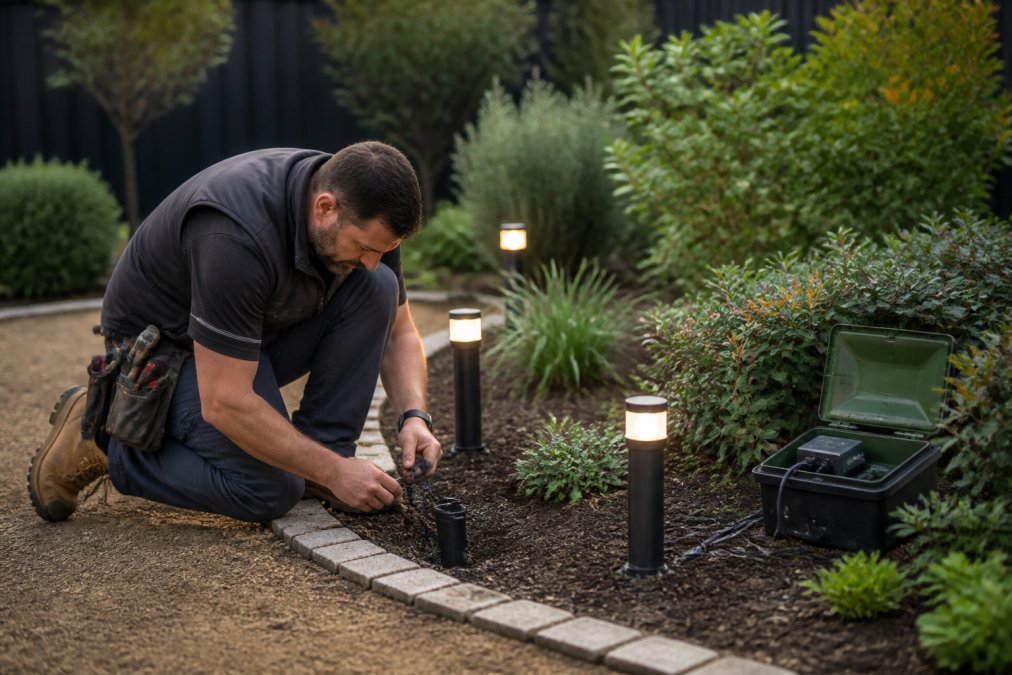
The choice between DIY and professional installation depends on your comfort with electrical work. Low-voltage systems (12V or 24V) are safer for DIY installation. A transformer steps down mains power to a safer voltage, and you run low-voltage cable to your lights from a standard power outlet.
Look for an IP66-rated outdoor transformer with overload protection and RCM and ACMA approval marks. Low-voltage cable should be buried at least 500mm deep if it crosses areas where you might dig, or run along the surface under mulch behind garden beds. For electrical safety in outdoor installations, always refer to [EXTERNAL_LINK: Australian Standards AS/NZS 3000:2018 Wiring Rules | standards.org.au] and local electrical regulations.
Mains-voltage installations (240V) require a qualified electrician. This is non-negotiable for safety and legal compliance. A qualified electrician ensures proper earthing, correct circuit protection, weatherproof connections, and compliance with electrical standards.
Weatherproofing is essential: all outdoor connections must be IP-rated, with sealed junction boxes and proper cable glands. Water ingress causes corrosion, short circuits, and failure. Test your installation in stages, install ambient lighting first, check brightness, then add task and accent layers. This prevents over-lighting and lets you adjust positions before permanent installation.
Energy-Efficient LED and Solar Garden Lighting Options
LED technology has transformed garden lighting economics. A modern LED uses 80% less energy than equivalent halogen lighting while lasting 10 times longer. [EXTERNAL_LINK: The Australian government’s Your Home guide provides details on energy-efficient lighting | yourhome.gov.au]. Current LEDs render colours naturally and are available in every colour temperature from warm (2700K) to cool daylight (6500K).
Solar pathway lights require zero running costs and no wiring but depend on sunlight and typically provide less brightness than mains-powered alternatives. The best solar lights use high-quality lithium batteries and have an IP65 rating minimum. Mains-powered LED systems cost more upfront but deliver superior brightness and reliability. An LED spotlight on a low-voltage system uses around 5-10 watts and produces 300-500 lumens.
Dimmable LED systems let you adjust brightness to suit the moment and reduce energy consumption further. Smart LED systems integrate with home automation, allowing you to schedule lights to turn on at sunset, dim gradually, or respond to motion sensors.
When comparing energy costs, factor in the lifespan. An LED lasting 25,000 hours versus a halogen lasting 2,000 hours means the LED pays for itself in reduced replacements alone, before considering electricity savings.
Deck, Patio, and Alfresco Dining Area Lighting
Outdoor entertaining spaces need lighting that balances visibility with ambiance. Combine ambient lighting for overall visibility, task lighting for dining areas (aim for 200-300 lumens per table), and accent lighting for atmosphere.
String lights (festoon lights) are decorative and create a festive mood but aren’t bright enough for serious task lighting, so supplement with lights over dining tables. Step and deck lights prevent trips while adding visual interest; position them on the outer edge of steps where light illuminates the tread.
Warm white (2700K) is flattering to people and food and creates a relaxed mood. Cool white makes people look tired and food unappetizing. Avoid downlighting from directly above, which creates harsh shadows on faces; uplighting or side lighting is more flattering. Use fixtures with diffusers to direct light downward and position lights slightly above or to the side of seating rather than directly overhead.
WaterPro’s offers professional design and installation for deck and patio lighting systems. With over three decades of experience in garden lighting design ideas, our team understands how to balance aesthetics with functionality.
Garden Lighting Design Ideas That Respect Your Neighbours
Good lighting respects boundaries. Keep light on your property by positioning lights to illuminate features on your side with beam angles directed away from neighbouring properties.
Beam angle control is your primary tool: a narrow beam angle (20-30 degrees) keeps light focused on your intended feature. Ground-level pathway lights create less spill than tall fixtures. Warm white light feels less intrusive than cool white. Lights on timers are more neighbourly than lights running all night.
Screening can help: a hedge, fence, or landscaping between your lights and your neighbour’s property reduces spill. Before installing lights near boundaries, walk your neighbour’s property at night and assess what light spill you’d create. A brief conversation about your plans prevents friction later.
WaterPro’s has installed hundreds of garden lighting systems across the Melbourne area. Our free garden lighting design service includes assessing boundary impacts and recommending positions that respect neighbours while lighting your garden beautifully.
Creating the best garden lighting design ideas starts with understanding how light works: layering creates depth, colour temperature sets mood, and thoughtful positioning prevents problems. Whether installing pathway lights for safety, spotlighting features for drama, or designing an entertaining space, light should enhance your garden without creating problems for anyone else.
The technical side, transformers, IP ratings, colour temperature, beam angles, is learnable. Many homeowners successfully install low-voltage systems themselves. For mains-voltage work or complex designs, professional installation ensures safety and longevity.
WaterPro’s can help you navigate every step. Book a free garden lighting design consultation, and our team will assess your space, recommend fixtures suited to your climate and style, and discuss installation options that fit your budget and comfort level. With over three decades of experience in garden lighting design ideas for Melbourne properties, we’ve solved every challenge. Get started today and transform your garden into an outdoor room you’ll enjoy year-round.
Frequently Asked Questions
What colour temperature should I choose for garden lighting design ideas?
Warm white (2700K-3000K Kelvin) suits relaxation areas and creates an inviting atmosphere for entertaining. Cool white (4000K-5000K) works better for task lighting and security zones where you need clarity. For garden lighting design, mix both: warm tones near seating areas and cooler tones along pathways for safety. The colour temperature you choose affects how your garden feels and functions throughout the evening.
Can I install garden lighting myself, or do I need a professional?
Low-voltage solar and battery-powered lights are safe for DIY installation and require no wiring. Mains-powered (240V) lighting requires professional installation to meet Australian electrical safety standards. A qualified technician ensures proper transformer setup, weatherproof connections, and compliance with relevant regulations.
What’s the best way to light a pathway for safety and aesthetics?
Pathway lighting design works best when lights are spaced 1-1.5 metres apart, positioned low to the ground (15-30 centimetres) to guide feet without creating glare. Use warm white LEDs (2700K-3000K) for a welcoming feel, and ensure each light has an IP rating of at least IP65 for weather resistance. Combine ground-level pathway lights with subtle uplighting on nearby plants or architectural features to add depth and visual interest while keeping the focus on safe navigation.
Are LED lights really better than traditional outdoor lighting?
LED lights consume 75-80% less energy than incandescent bulbs, last 25,000+ hours compared to 1,000 hours, and generate minimal heat. For garden lighting design, LEDs offer superior durability in harsh weather, better colour consistency, and dimmable options for mood control. They’re ideal for accent lighting, pathway lights, and deck illumination. The initial cost is higher, but the long lifespan and energy savings make LEDs the practical choice for most homeowners planning a garden lighting design.
This article was written using GrandRanker